
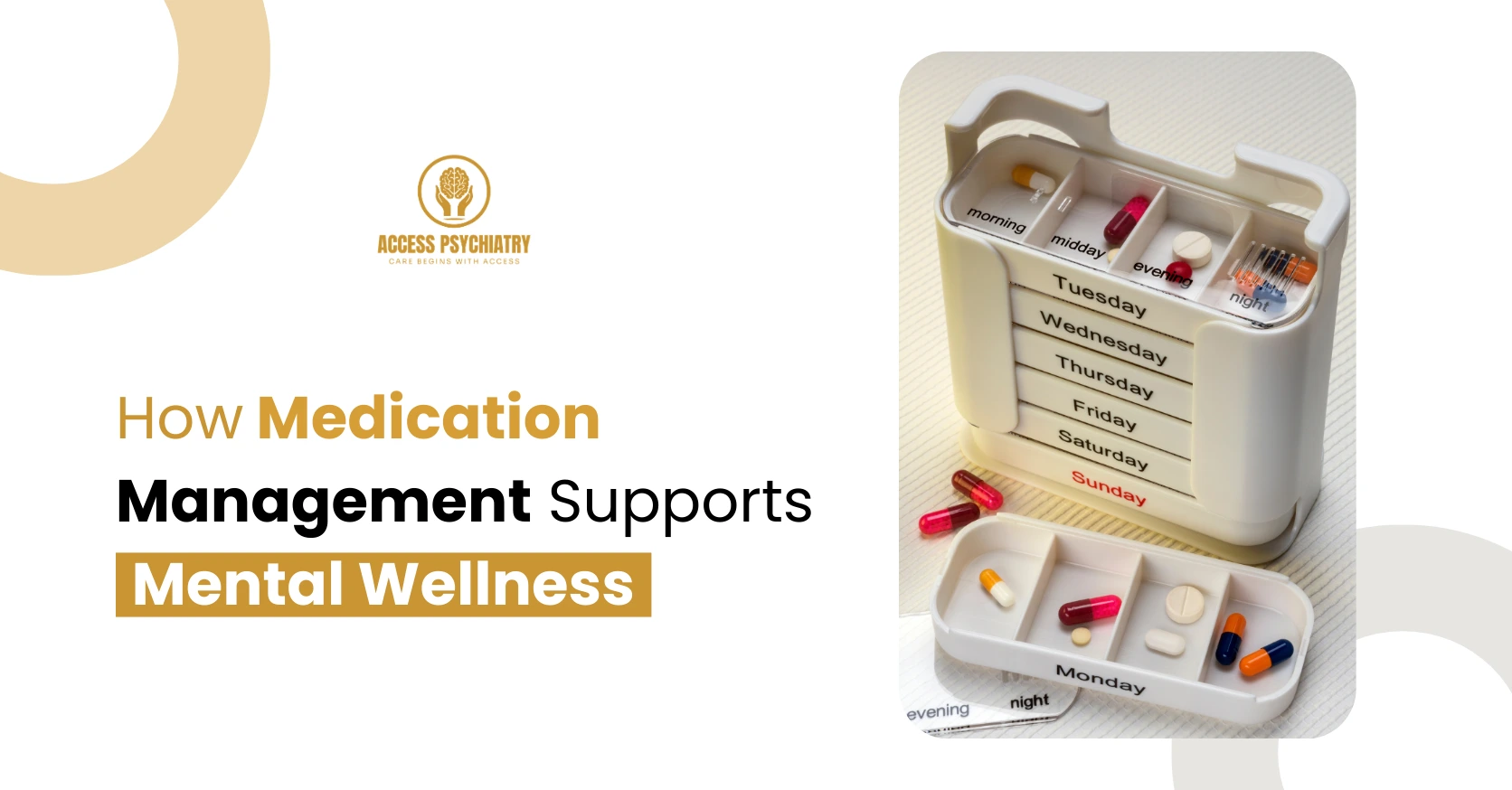
Mental health treatment is not always a straight path. For many individuals, medication can play an important role in recovery. It is not a shortcut or a replacement for personal growth, but a clinically guided tool that can help reduce symptoms and support stability.
When symptoms are better managed, individuals are often better able to engage in therapy, relationships, and daily life.
What Is Medication Management?
Medication management is an ongoing process, not just a prescription. A psychiatric provider evaluates symptoms, monitors response to treatment, and makes adjustments as needed.
This process typically includes:
- Reviewing symptoms and diagnosis
- Monitoring effectiveness of medication
- Assessing side effects and overall health
- Adjusting medications or doses when needed
Treatment is individualized and regularly reassessed to ensure it remains safe and effective.
Why Medication Management Matters
Mental health conditions such as depression, anxiety, bipolar disorder, Attention Deficit Hyperactivity Disorder (ADHD), and schizophrenia can affect many areas of life.
Medication management helps:
- Reduce symptoms
- Improve emotional stability
- Support daily functioning
Regular follow-up ensures that treatment continues to meet the patient’s needs over time.
A Collaborative Approach
Medication management works best when there is open communication between the patient and provider. Treatment decisions are made together, with discussion of benefits, risks, and expectations.
The goal is always appropriate care based on individual needs. Some people may require long-term treatment, while others may use medication for a period of time with ongoing reassessment.
Next Steps
If you are experiencing changes in mood, anxiety, focus, or overall mental well-being, professional support can help.
Appointments are available in person and through telehealth.
Visit accesstopsychiatry.com to schedule an appointment.