
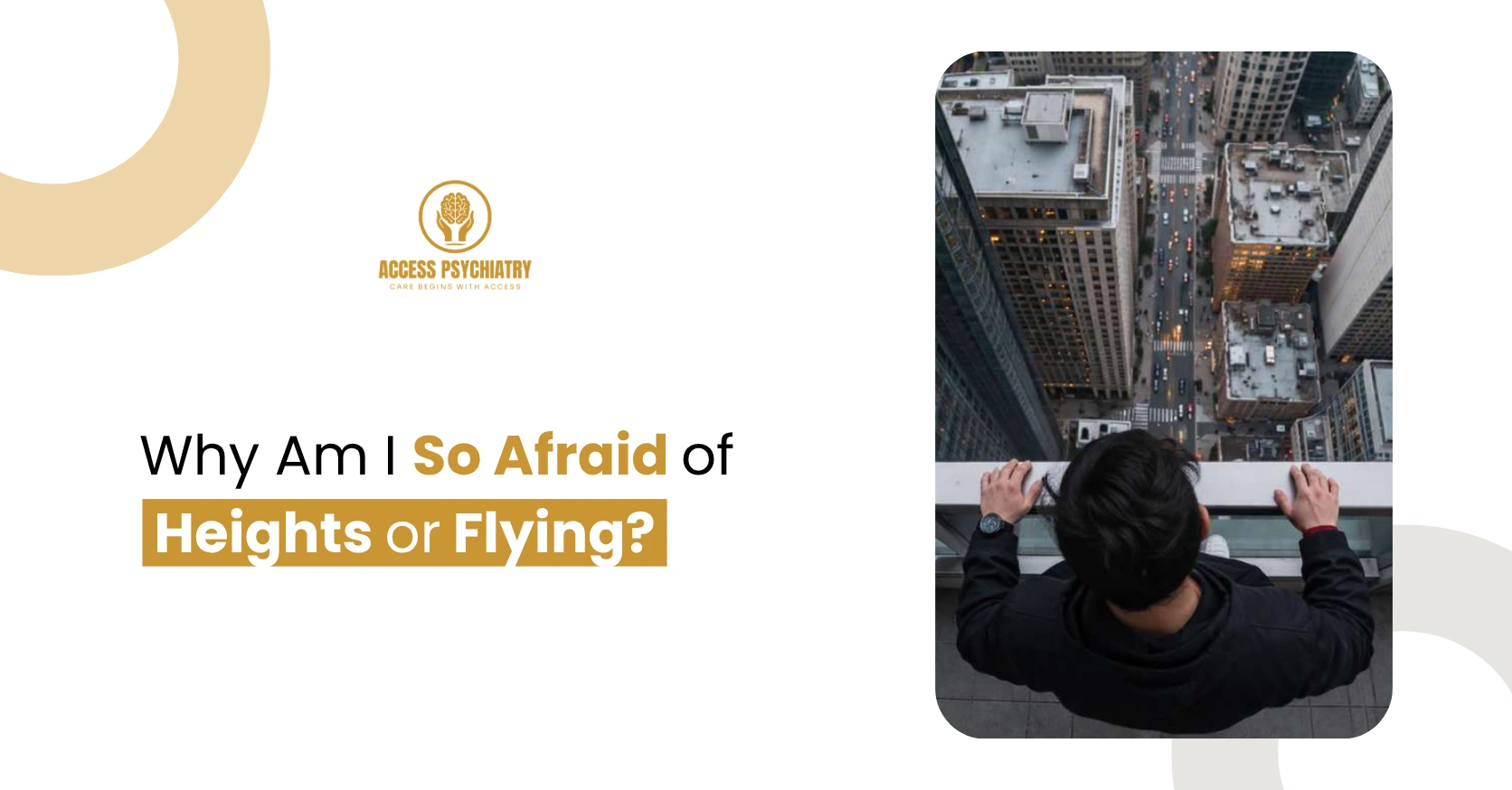
Fear of heights or flying is more common than many people think. Some people feel uneasy looking out from a high place, while others feel anxious getting on a plane. This fear can feel intense, even when you know you are safe.
Fear is the body’s natural way of protecting us. However, when fear becomes excessive and persistent, it can interfere with daily life. In clinical terms, this may be considered a specific phobia, such as acrophobia (fear of heights) or aviophobia (fear of flying).
Why Does This Fear Happen?
Research shows that fears like these develop from a mix of psychological and biological factors. Common causes include:
- Past distressing or traumatic experiences
- Learned fear from others or media exposure
- Increased baseline anxiety sensitivity
- Fear of losing control or being trapped
- Strong physical fear responses (panic symptoms)
Avoidance plays a major role. The more a person avoids heights or flying, the stronger the fear becomes over time. This is a well-established cycle in anxiety disorders.
What Does It Feel Like?
This fear is not just “nervousness.” It involves real physical and emotional reactions, including:
- Rapid heartbeat
- Sweating
- Shaking or dizziness
- Chest tightness
- Shortness of breath
- Nausea
- Urge to escape
- Thoughts like “Something bad will happen”
Some people experience anxiety even before the situation, known as anticipatory anxiety.
How It Affects Daily Life
When fear becomes severe, it can limit daily functioning. People may avoid travel, tall buildings, or certain activities. Over time, this can lead to:
- Reduced independence and freedom
- Increased stress and worry
- Strain on work or relationships
- Feelings of frustration or isolation
This is why untreated phobias can significantly impact quality of life.
When Should You Seek Help?
It may be time to seek support if:
- You avoid important activities due to fear
- The fear feels overwhelming or uncontrollable
- You experience panic symptoms
- Your daily life is restricted
- You feel mentally exhausted from constant worry
These are signs that the fear has moved beyond normal and is treatable.
Evidence-Based Treatment Options
Effective treatments are available and well-supported by research:
1. Cognitive Behavioral Therapy (CBT)
The first-line treatment for phobias
- Helps identify and challenge fear-based thoughts
- Uses gradual exposure to reduce avoidance
- Builds confidence over time
2. Exposure Therapy
A structured approach to safely face feared situations step by step
- Proven to reduce fear response
- Helps retrain the brain’s reaction to triggers
3. Medication (when needed)
In some cases, medication may help manage symptoms, especially if anxiety is severe or associated with panic.
Simple Coping Strategies
While treatment is ongoing, these techniques can help:
- Slow, controlled breathing
- Grounding techniques (naming what you see, hear, feel)
- Gradual exposure in small steps
- Positive self-reminders (“This feeling will pass”)
- Seeking support from someone you trust
These strategies help calm the body and reduce the intensity of fear.
A Gentle Path Forward
Fear does not disappear overnight, but it is highly treatable. With the right support, people can regain confidence and return to activities they once avoided.
A structured plan may include:
- Identifying triggers
- Setting gradual goals
- Practicing coping skills
- Working with a mental health professional
How Access Psychiatry Supports You
At Access Psychiatry, LLC, we provide personalized care for anxiety disorders, including specific phobias. Our approach is patient-centered and evidence-based, helping you:
- Understand your fear
- Learn effective coping tools
- Reduce anxiety
- Build confidence safely
We offer both in-person and telehealth services to meet your needs.
Final Thoughts
Being afraid of heights or flying does not mean something is wrong with you. It means your brain is trying to protect you. But when fear becomes too strong, support can help you regain control.
With the right care, life can open up again.
FAQs
Is this fear normal?
Yes. It becomes a concern when it interferes with daily life.
What are the signs that the fear is too strong?
Physical symptoms like shaking, sweating, panic, and avoidance of important activities.