
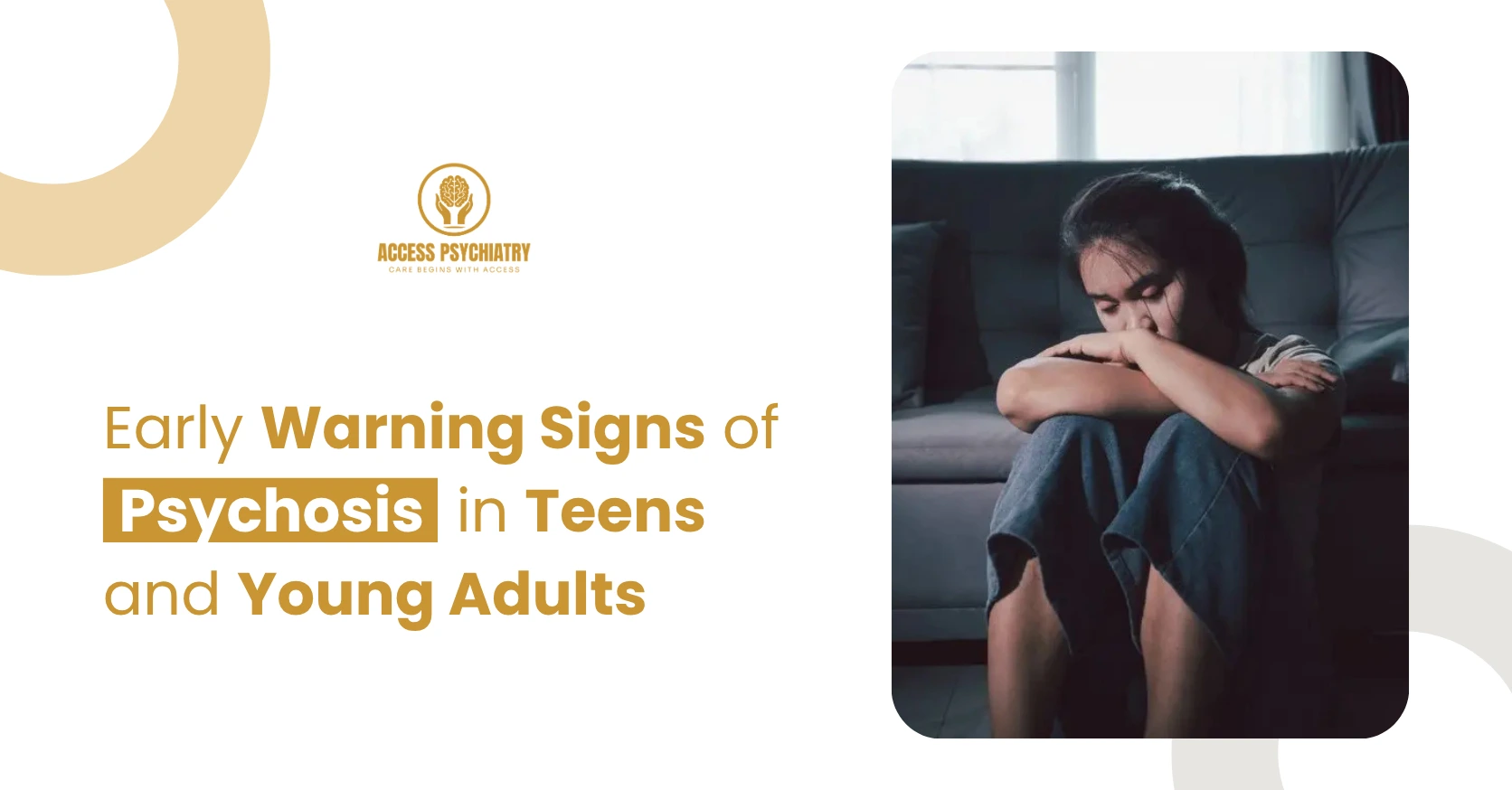
Psychosis does not usually happen the way it is shown in movies. For many teens and young adults, the early signs appear gradually. At first, families may think the changes are due to stress, puberty, depression, anxiety, substance use, or a difficult life transition.
By the time loved ones realize something more serious may be happening, the changes may have been present for weeks or months.
The Early Phase Before Psychosis
Before a first episode of psychosis, some young people experience what clinicians call a prodromal period. During this time, symptoms may be subtle and easy to miss. A teen may seem more withdrawn, unusually suspicious, emotionally flat, or less able to function at school, work, or home.
Early evaluation matters. Research supports early intervention and coordinated specialty care for first-episode psychosis, which can improve outcomes and help young people stay connected to school, work, family, and daily life.
Why Teens and Young Adults Are at Higher Risk
Psychosis most often begins in late adolescence or young adulthood. This is also a time when the brain is still developing, especially areas involved in judgment, impulse control, emotional regulation, and decision-making.
Family history can also increase risk. Having a first-degree relative with schizophrenia or schizoaffective disorder does not mean someone will develop psychosis, but it does increase vulnerability. Substance use, especially high-potency marijuana, can also increase the risk of psychotic symptoms in vulnerable young people.
Warning Signs to Watch For
One sign alone does not mean someone has psychosis. What matters is a pattern of changes that lasts for weeks and affects more than one area of life.
Possible early warning signs include:
- Pulling away from friends or family without a clear reason
- Decline in school, work, or daily functioning
- Significant sleep disruption
- New suspiciousness or fear that others are watching, talking about, or following them
- Hearing sounds or voices that others do not hear
- Seeing shadows, movement, or figures that others do not see
- Emotions becoming unusually flat or disconnected
- Speech that becomes hard to follow or disorganized
- Decline in hygiene or self-care
- Strong preoccupation with unusual beliefs or ideas
- Believing random events, songs, messages, or comments have a special personal meaning
Many young people do not immediately share unusual experiences because they are confused, embarrassed, or unsure whether what they are experiencing is real. Families may notice changes before the young person is able to explain them.
What Psychosis Can Be Mistaken For
Early psychosis may look like depression, anxiety, trauma, ADHD, substance use, or normal teenage stress. Depression can cause withdrawal, low motivation, poor sleep, and reduced emotional expression. Anxiety can look like suspiciousness or hypervigilance. Marijuana and other substances can trigger or worsen psychotic symptoms, especially in young people with underlying vulnerability.
Because symptoms can overlap, a full psychiatric evaluation is important.
What Families Often Notice First
Families often notice that the young person feels different. They may seem harder to reach emotionally, more isolated, unusually suspicious, or less connected to reality. They may laugh at inappropriate times, seem emotionally blank, speak in a way that is difficult to follow, or show a decline in functioning.
Trusting that concern is important. Waiting too long can delay treatment.
What an Evaluation Looks Like
There is no single lab test for psychosis. A proper evaluation includes a detailed psychiatric interview, review of symptoms, timeline of changes, sleep, mood, trauma history, substance use, medical history, family psychiatric history, school or work functioning, and safety concerns.
Input from a parent, caregiver, or close family member is often very helpful because young people may not fully recognize or report their symptoms.
If early psychosis or first-episode psychosis is identified, coordinated specialty care may be recommended. This may include medication management, individual therapy, family support, education or employment support, and case management. The goal is not only to reduce symptoms, but also to protect the young person’s future, relationships, and daily functioning.
When to Seek Help
A teen or young adult should be evaluated promptly if concerning changes last for several weeks, worsen over time, or include hallucinations, paranoia, unusual beliefs, major decline in functioning, or safety concerns.
Early evaluation gives families more options and may improve long-term outcomes.
Dr. Mapendo Karen Safari and the Access Psychiatry team provide mental health services for children, adolescents, and adults in Glen Burnie and Laurel, Maryland.
Phone: (443) 302-9788 | (301) 709-5921
Email: info@accesstopsychiatry.com
Glen Burnie: 7310 Ritchie Highway, Suite 200, Glen Burnie, MD 21061
Laurel: 14504 Greenview Drive, Suite 301, Laurel, MD 20708
“Even the darkest night ends with the sunrise. Hold on, healing is already on its way to meet you.”
Dr. M. Karen Safari, DNP