
Irregular periods can be frustrating, confusing, and sometimes concerning. Your menstrual cycle is an important indicator of overall reproductive and hormonal health. When periods become unpredictable, arrive too early, too late, or stop altogether, it may be a sign that your body needs further evaluation.
At Access Psychiatry, we view irregular periods as more than an inconvenience. Changes in your menstrual cycle can provide valuable information about your overall health and may signal an underlying condition that deserves attention.
A menstrual consultation can help identify the cause of irregular periods and guide you toward effective treatment and long-term wellness.
What Is a Menstrual Consultation?
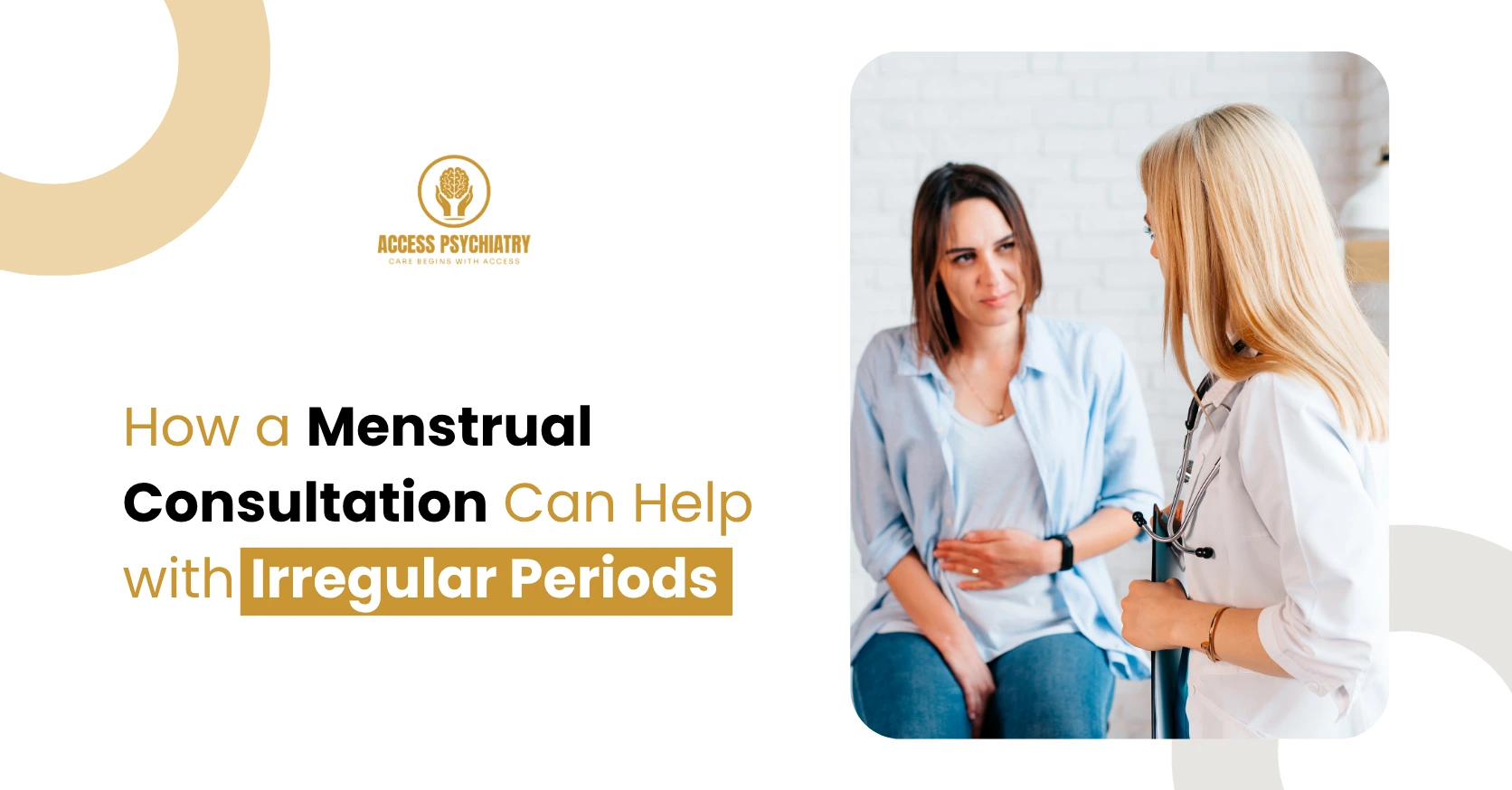
A menstrual consultation is a comprehensive medical evaluation focused on menstrual health. During this visit, your healthcare provider will discuss your menstrual history, symptoms, lifestyle factors, medical history, and any concerns you may have about your cycle.
The goal is to understand what may be contributing to changes in your menstrual pattern and determine whether additional testing or treatment is needed.
What Are Irregular Periods?
A normal menstrual cycle typically occurs every 21 to 35 days, although some variation between individuals is normal.
Periods may be considered irregular if:
- Cycles consistently occur outside the 21 to 35-day range
- Periods are frequently skipped
- Bleeding patterns change significantly from month to month
- Bleeding becomes unusually heavy or prolonged
- Cycles become unpredictable after previously being regular
Some women may also experience increased cramping, pelvic discomfort, or changes in flow alongside cycle irregularities.
Common Causes of Irregular Periods
Many factors can affect the menstrual cycle, including:
Hormonal Imbalances
Hormones regulate ovulation and menstruation. When hormone levels become imbalanced, periods may become irregular. Conditions such as Polycystic Ovary Syndrome (PCOS) are common causes of missed or unpredictable periods.
Stress
Physical and emotional stress can affect the body’s hormonal signaling systems, which may temporarily disrupt ovulation and menstrual cycles.
Thyroid Disorders
The thyroid gland plays an important role in regulating metabolism and hormone balance. Both underactive and overactive thyroid conditions can affect menstrual regularity.
Weight Changes
Significant weight gain, weight loss, restrictive dieting, or excessive exercise can interfere with hormone production and menstrual function.
Reproductive Health Conditions
Structural conditions involving the uterus or ovaries, such as fibroids, ovarian cysts, or other gynecologic disorders, may contribute to abnormal bleeding patterns.
How a Menstrual Consultation Helps
Identifies the Underlying Cause
Irregular periods can result from many different conditions. A consultation helps your provider evaluate potential causes, including:
- Hormonal imbalances
- PCOS
- Thyroid disorders
- Stress-related hormonal changes
- Weight-related hormonal changes
- Uterine or ovarian conditions
Rather than guessing, the evaluation focuses on identifying the specific cause of your symptoms.
Provides a Better Understanding of Your Health
Understanding why your cycle has changed can reduce uncertainty and help you make informed decisions about your health.
Your provider can explain:
- How your menstrual cycle works
- Possible reasons for cycle changes
- Whether your symptoms are within a normal range
- What treatment options may be appropriate
Uses Diagnostic Testing When Needed
Depending on your symptoms and medical history, additional testing may be recommended.
Common tests include:
- Hormone level testing
- Thyroid function testing
- Pregnancy testing when appropriate
- Pelvic ultrasound imaging
These evaluations help provide a more complete picture of your reproductive and hormonal health.
Creates a Personalized Treatment Plan
There is no one-size-fits-all approach to menstrual health. Treatment recommendations depend on the underlying cause of the irregularity and your individual health goals.
Your treatment plan may include:
- Hormonal therapies
- Lifestyle modifications
- Nutrition and weight management guidance
- Stress reduction strategies
- Treatment of underlying medical conditions
- Ongoing monitoring and follow-up care
Supports Overall Wellness
Menstrual health is closely connected to overall health. Addressing the cause of irregular periods may also help improve:
- Energy levels
- Mood stability
- Fertility and reproductive health
- Sleep quality
- Hormonal balance
Why Self-Diagnosis Isn’t Enough
Online information can be helpful for education, but it cannot replace a medical evaluation. Many different conditions can cause similar symptoms.
For example, missed periods may result from stress, thyroid disease, PCOS, pregnancy, or other medical conditions. A professional evaluation helps ensure that the correct diagnosis is made and appropriate treatment is provided.
When Should You See a Doctor?
Consider scheduling a menstrual consultation if:
- Your periods have become consistently irregular
- You frequently skip periods
- Your bleeding is unusually heavy or prolonged
- You experience severe menstrual pain
- Your cycle changes suddenly without a clear reason
- You are concerned about fertility or hormonal health
Early evaluation can help identify potential concerns before they become more significant.
Take Charge of Your Menstrual Health
You do not have to navigate irregular periods alone. Understanding the cause of cycle changes is the first step toward improving your health and well-being.
A menstrual consultation provides the opportunity to discuss your concerns, receive appropriate testing when needed, and develop a personalized plan that supports your long-term health.
Final Thoughts
Irregular periods are often a sign that something in the body may need attention. While occasional cycle changes can be normal, persistent irregularity should not be ignored.
At Access Psychiatry, we are committed to helping women understand their reproductive health and receive personalized, evidence-based care. If you have concerns about your menstrual cycle, schedule a consultation with our team. Together, we can identify the cause and create a plan that supports your health and wellness.
Frequently Asked Questions
Can irregular periods affect fertility?
Yes. Some conditions that cause irregular periods can also affect ovulation, which may make conception more difficult. Identifying and treating the underlying cause can often improve fertility outcomes.
Is it normal to miss a period occasionally?
Occasional missed periods can occur due to stress, illness, travel, weight changes, or other temporary factors. However, recurrent missed periods should be evaluated by a healthcare provider.
Can stress cause irregular periods?
Yes. Chronic or significant stress can affect hormone regulation and may disrupt ovulation, leading to irregular menstrual cycles.
What tests are commonly ordered for irregular periods?
Depending on your symptoms, your provider may recommend hormone testing, thyroid function tests, pregnancy testing, or pelvic ultrasound imaging to help identify the cause.