

Written by Dr. Mapendo Karen Safari, DNP, APRN, CRNP, PMHNP-BC
Board-Certified Psychiatric-Mental Health Nurse Practitioner
This article is for educational purposes only and is not a substitute for professional medical advice, diagnosis, or treatment.
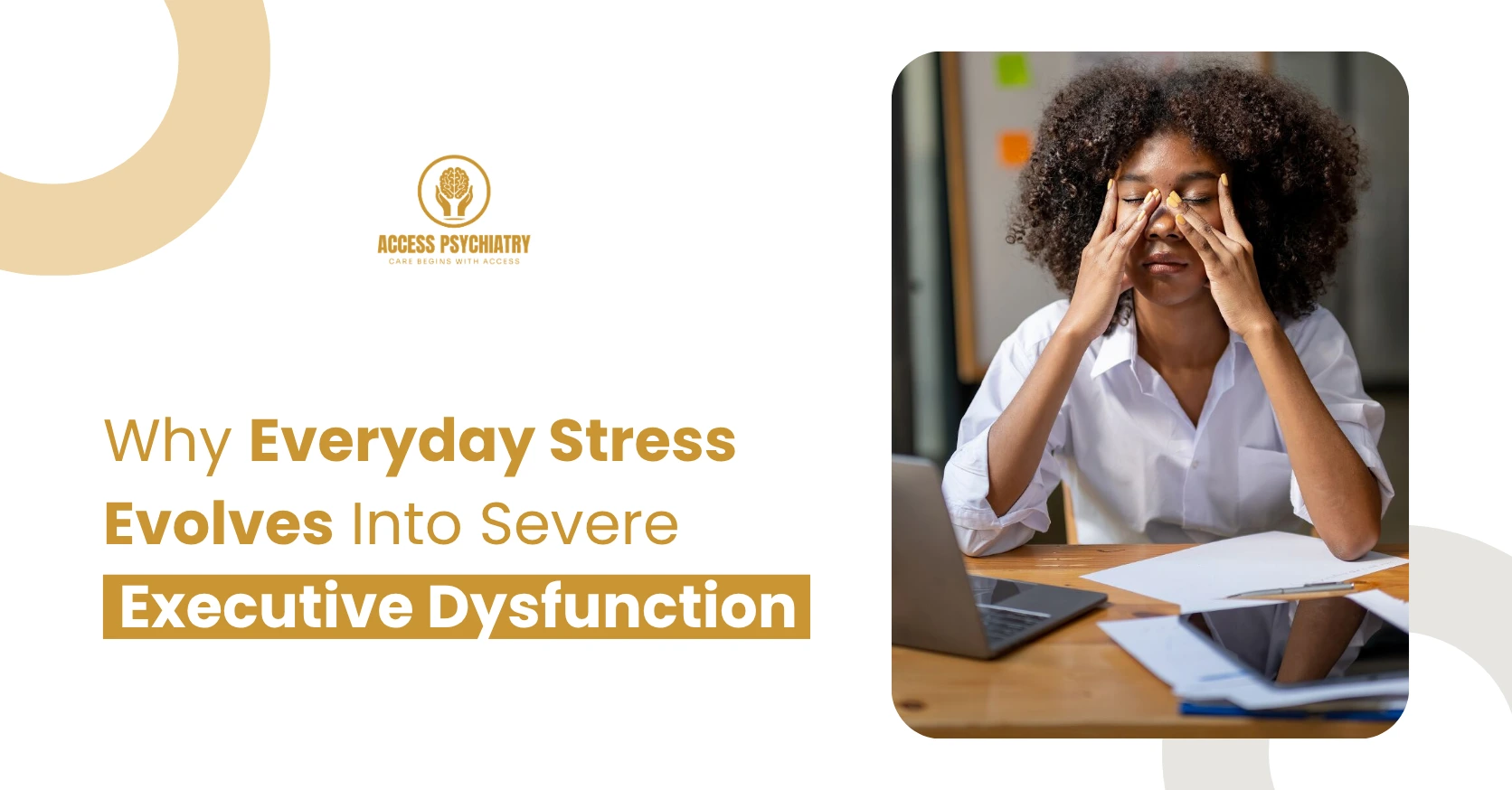
Have you ever stared at your to-do list, knowing exactly what needs to be done—but still felt unable to begin?
You’re not lazy, unmotivated, or lacking willpower.
For many people, chronic stress can interfere with executive functioning—the set of mental skills that help us plan, organize, prioritize, start tasks, stay focused, and complete daily responsibilities.
What Is Executive Function?
Executive functions are cognitive processes primarily coordinated by the prefrontal cortex, the area of the brain responsible for:
- Planning and organization
- Working memory
- Task initiation
- Decision-making
- Cognitive flexibility
- Self-control and impulse regulation
These skills allow us to manage daily life efficiently. When executive functioning is disrupted, even routine tasks can begin to feel overwhelming.
How Chronic Stress Affects the Brain
When the body experiences prolonged stress, it releases stress hormones such as cortisol. While these hormones are helpful during short-term emergencies, persistently elevated stress can interfere with the brain networks responsible for higher-level thinking.
Research has shown that chronic stress is associated with changes in the functioning and in some studies, the structure of the prefrontal cortex, while increasing activity in brain regions involved in threat detection, such as the amygdala. Rather than focusing on planning or problem-solving, the brain shifts toward survival mode.
As a result, you may notice:
- Difficulty getting started on tasks
- Forgetfulness
- Poor concentration
- Mental fatigue
- Trouble organizing information
- Feeling overwhelmed by responsibilities
These symptoms are real and reflect changes in how the brain is functioning under chronic stress.
Why Symptoms Often Get Worse Over Time
Executive dysfunction rarely appears overnight.
Initially, people compensate by using calendars, reminders, checklists, or working longer hours. These strategies may help for a while.
However, if chronic stress continues without adequate recovery, everyday responsibilities may become increasingly difficult. Tasks that once felt simple may require significantly more effort, leading to frustration, reduced productivity, and declining confidence.
Poor sleep often compounds the problem. Restorative sleep plays an essential role in learning, memory consolidation, emotional regulation, and cognitive performance. When sleep becomes disrupted, concentration, attention, and decision-making often worsen.
Executive Dysfunction Is Not Always ADHD
Executive dysfunction is a symptom, not a diagnosis.
Several conditions can affect executive functioning, including:
- Chronic stress
- Anxiety disorders
- Depression
- Attention-Deficit/Hyperactivity Disorder (ADHD)
- Trauma-related disorders
- Certain medical or neurological conditions
One important distinction is that ADHD begins in childhood, even if it is not recognized until adulthood. In contrast, executive difficulties that develop after months or years of significant stress may have a different underlying cause.
A comprehensive psychiatric evaluation helps determine what is contributing to the symptoms so that treatment targets the correct condition.
Why Starting a Task Can Feel Impossible
Many people describe executive dysfunction by saying:
“I know exactly what I need to do. I just can’t seem to start.”
This is a common experience.
Task initiation depends on multiple brain systems working together, including networks involved in motivation, attention, and reward processing. Chronic stress, anxiety, depression, and ADHD can all interfere with these systems, making it difficult to translate intention into action—even when the desire to complete the task is present.
This is not simply procrastination or a lack of motivation.
What Can Help?
Recovery often involves addressing both the underlying cause and the executive dysfunction itself.
Evidence-based strategies include:
- Prioritize healthy sleep. Consistent, restorative sleep supports attention, memory, and emotional regulation.
- Stay physically active. Regular exercise has been shown to improve mood, reduce stress, and enhance cognitive function.
- Break large tasks into small, manageable steps. Starting with one simple action—such as opening a document—reduces cognitive overload.
- Use external supports. Calendars, reminders, planners, visual schedules, and accountability partners can reduce the burden on working memory.
- Treat underlying mental health conditions. Anxiety, depression, trauma, and ADHD often contribute to executive dysfunction. Appropriate treatment—including psychotherapy, medication when indicated, or both—can significantly improve functioning.
When Should You Seek Help?
If you’ve noticed that you’re consistently functioning below your usual baseline and it’s affecting your work, school, relationships, or daily responsibilities it may be time for a professional evaluation.
Executive dysfunction is treatable, but identifying its underlying cause is the first step.
Access Psychiatry
Dr. Mapendo Karen Safari, DNP, APRN, CRNP, PMHNP-BC
Laurel Office
14504 Greenview Drive, Suite 301
Laurel, MD 20708
Email: info@accesstopsychiatry.com
Disclaimer: This article is intended for educational purposes only and should not be considered medical advice. Always consult a qualified healthcare professional regarding diagnosis, treatment, or concerns about your mental health.