
By Dr. M. Safari, DNP, APRN, PMHNP-BC
Founder of Access Psychiatry, LLC
Have you ever eaten when you weren’t hungry, not because you needed food, but because you felt overwhelmed, anxious, lonely, or emotionally exhausted?
Perhaps you have had a stressful day and turned to food for comfort. For most people, occasional emotional eating is familiar.
But what happens when eating becomes difficult to control? What happens when someone eats an unusually large amount of food, feels powerless to stop, and then experiences overwhelming guilt, shame, or regret?
What happens when this pattern repeats, yet the person feels too embarrassed to tell anyone?
Sometimes, the struggle is not simply about food. It is about the emotional distress surrounding eating and the loss of control that follows.
At Access Psychiatry, we recognize that mental health conditions do not always present as sadness, anxiety, or emotional withdrawal. Sometimes, psychological distress appears through behaviors that individuals struggle to understand or control.
One such condition is binge-eating disorder (BED), the most common recognized eating disorder in the United States.
It affects people of all ages, genders, cultures, and body sizes. Yet it frequently remains misunderstood, undiagnosed, and untreated.
What Is Binge-Eating Disorder?
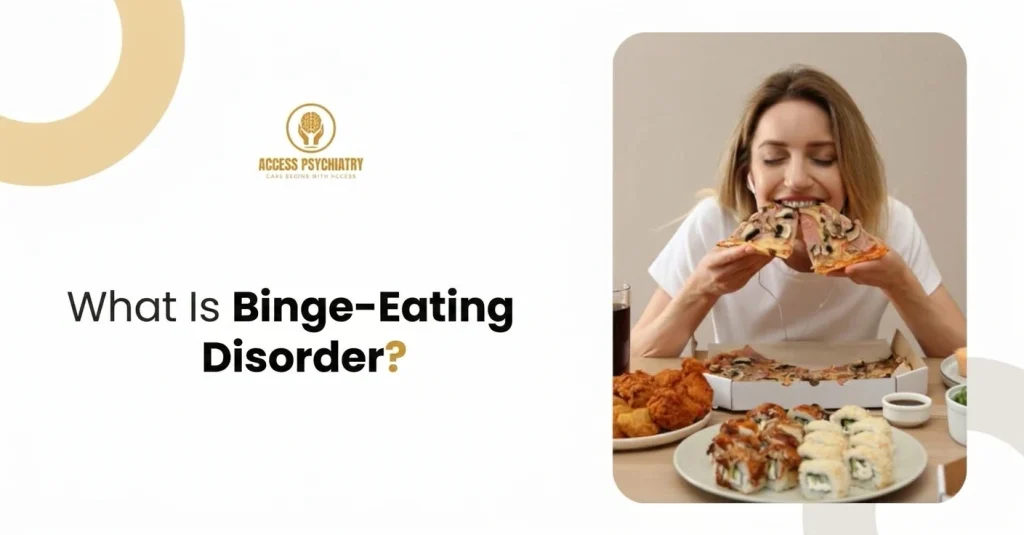
Binge-eating disorder is a recognized psychiatric condition characterized by recurrent episodes of consuming an unusually large amount of food within a relatively short period, accompanied by a sense of losing control overeating.
During an episode, a person may feel unable to stop eating or control how much they consume.
Unlike bulimia nervosa, binge-eating disorder does not involve regular compensatory behaviors such as self-induced vomiting, laxative misuse, or excessive exercise.
According to the DSM-5-TR, binge-eating episodes generally occur at least once weekly for three months and are associated with significant distress.
Importantly, binge-eating disorder is not simply overeating, poor discipline, or a lack of willpower. It is a diagnosable mental health condition that deserves appropriate treatment.
The Statistics: More Common Than You May Think
Research consistently identifies binge-eating disorder as more prevalent than anorexia nervosa and bulimia nervosa in U.S. population studies.
According to the National Institute of Mental Health, a nationally representative survey of U.S. adults conducted between 2001 and 2003 found:
- 2.8% of adults experienced binge-eating disorder during their lifetime.
- 1.2% of adults experienced the disorder within the preceding year.
- The past-year prevalence was 1.6% among women and 0.8% among men.
These are historical national survey estimates, not current 2026 prevalence figures. More recent studies produce different estimates depending on the population and diagnostic methods used.
The National Institute of Diabetes and Digestive and Kidney Diseases also reports that approximately 1.6% of adolescents aged 13–18 years are affected.
Although binge-eating disorder can begin during adolescence, it also frequently emerges in young adulthood.
These numbers remind us that behind what may appear to be ordinary eating habits, some individuals are experiencing significant psychological distress.
Who Can Develop Binge-eating disorder?
One of the greatest misconceptions about eating disorders is that they affect only young women who are underweight.
Binge-eating disorder challenges that stereotype.
It affects men and women, teenagers, young adults, middle-aged individuals, and older adults.
It occurs across racial, ethnic, and socioeconomic backgrounds.
Although binge-eating disorder is more common among individuals living with obesity, it can occur at any body weight. Most people with obesity do not have binge-eating disorder.
A person’s appearance alone cannot determine whether they have an eating disorder.
This is why clinicians must look beyond body weight and explore the individual’s relationship with food, emotions, and eating behaviors.
What Causes Binge-eating disorder?
There is no single cause.
Research suggests that binge-eating disorder develops through a complex interaction of biological, psychological, and environmental factors.
1. Genetic and Biological Vulnerability
Family studies suggest that genetic factors contribute to susceptibility.
Differences in brain processes involved in reward, appetite regulation, and emotional control may also play a role.
2. Emotional Distress
Some individuals experience binge-eating episodes during periods of anxiety, sadness, loneliness, anger, or overwhelming stress.
Eating may temporarily distract from uncomfortable emotions, but the relief is often followed by guilt or shame.
3. Restrictive Dieting
Repeatedly skipping meals, following rigid food rules, or severely restricting food intake can increase vulnerability to binge-eating episodes in some individuals.
This may contribute to a cycle of restriction, binge eating, guilt, and renewed attempts to restrict food.
4. Trauma and Adverse Experiences
Childhood adversity, bullying, criticism about weight, and distressing interpersonal experiences are associated with increased vulnerability in some individuals.
However, not everyone with binge-eating disorder has experienced trauma.
5. Psychological and Social Factors
Body dissatisfaction, low self-esteem, social pressure, and negative beliefs about weight or appearance may contribute to the development or persistence of the disorder.
Depression and anxiety frequently coexist with binge-eating disorder, although neither condition is required for the diagnosis.
Seven Warning Signs You Should Recognize
Binge-eating disorder often develops privately. Individuals may hide their symptoms because they fear criticism or judgment.
Common warning signs include:
1. Eating unusually large amounts of food: Consuming substantially more food than most people would eat under similar circumstances.
2. Feeling unable to stop eating: Experiencing a loss of control during eating episodes.
3. Eating rapidly: Consuming food much faster than usual.
4. Eating beyond physical fullness: Continuing to eat until feeling uncomfortably full.
5. Eating without hunger: Consuming large quantities of food despite not feeling physically hungry.
6. Eating alone because of embarrassment: Avoiding eating around others due to shame about the amount consumed.
7. Feeling guilt, sadness, or disgust afterward: Experiencing significant emotional distress following binge-eating episodes.
These symptoms become particularly concerning when they occur repeatedly and interfere with emotional well-being or daily functioning.
Is Emotional Eating the Same as Binge-Eating Disorder?
No. Emotional eating and binge-eating disorder are not interchangeable.
Emotional eating refers to eating in response to feelings rather than physical hunger.
Someone may occasionally eat more than usual after a stressful day without having a psychiatric disorder.
Binge-eating disorder involves recurrent episodes characterized by an unusually large amount of food, loss of control, and significant distress.
The distinction is important because occasional overeating does not automatically require psychiatric treatment, whereas persistent binge-eating symptoms may warrant professional evaluation.
Why Binge-Eating Disorder Should Never Be Ignored
The consequences extend beyond eating habits.
Individuals with binge-eating disorder may experience persistent shame, reduced self-esteem, social withdrawal, and difficulty maintaining healthy relationships.
The condition is also associated with depression, anxiety, and increased psychological distress.
Some individuals experience weight gain and related medical complications, including type 2 diabetes, cardiovascular risk factors, sleep difficulties, and gastrointestinal symptoms.
However, these complications are not present in everyone, and medical risk cannot be determined by appearance alone.
The emotional suffering associated with binge-eating disorder deserves attention regardless of a person’s weight.
Can Binge-Eating Disorder Be Treated?
Yes. Effective, evidence-based treatment is available.
Treatment focuses on reducing binge-eating episodes, restoring healthier eating patterns, addressing emotional triggers, and improving psychological well-being.
Cognitive Behavioral Therapy (CBT)
Eating disorder-focused CBT is one of the most extensively studied treatments for binge-eating disorder.
It helps individuals identify unhelpful beliefs about food, recognize triggers, reduce restrictive eating patterns, and develop healthier coping strategies.
Interpersonal Psychotherapy (IPT)
IPT focuses on interpersonal difficulties that may contribute to emotional distress and binge eating.
Treatment may address relationship conflicts, grief, social isolation, or challenging life transitions.
The American Psychiatric Association recommends eating disorder-focused CBT or IPT as evidence-based psychotherapy options for binge-eating disorder.
Medication Management
Medication may be appropriate for some adults, particularly when psychotherapy alone has not provided sufficient improvement or when medication is preferred after discussing treatment options.
Lisdexamfetamine is FDA-approved for moderate to severe binge-eating disorder in adults. It is not approved for weight loss and requires careful evaluation because it is a controlled stimulant with cardiovascular and misuse-related risks.
Antidepressants may also be considered in selected cases, including when depression or anxiety is present.
Medication selection should follow a comprehensive psychiatric assessment and consideration of medical history, coexisting conditions, and individual treatment goals.
Nutritional Counseling and Medical Support
A registered dietitian experienced in eating disorders can help individuals develop consistent eating patterns and reduce rigid or restrictive food rules.
Medical monitoring may be necessary when the disorder is associated with metabolic conditions or other health concerns.
Treatment should focus on recovery from disordered eating—not simply on changing body weight.
What Can Families and Loved Ones Do?
One of the most harmful responses to binge-eating disorder is to assume that the person simply needs greater discipline.
Statements such as “Just stop eating so much,” “You need more self-control,” or “Why can’t you stick to a diet?” may increase shame and discourage someone from seeking help.
Instead, approach the conversation with empathy.
Consider saying:
“I’ve noticed that eating has been causing you distress. I care about how you’re feeling, and I want you to know that you don’t have to manage this alone.”
Avoid commenting unnecessarily on body size, weight, or food choices.
Encourage professional evaluation when eating behaviors become repetitive, distressing, or difficult to control.
For parents, remember that teenagers may conceal symptoms because they fear embarrassment or disappointing their families.
A compassionate response can help create the emotional safety needed for honest communication.
How Access Psychiatry Can Help
AtAccess Psychiatry, LLC, we understand that eating disorders involve much more than food.
They can reflect complex relationships between emotional regulation, psychological distress, biological vulnerability, and behavioral patterns.
Our approach begins with comprehensive psychiatric evaluation to identify symptoms, assess coexisting mental health conditions, and determine appropriate treatment needs.
Care may include psychiatric medication management when indicated, psychoeducation, supportive interventions, and coordination with eating disorder-focused psychotherapy, nutritional counseling, and medical services.
We believe that effective mental health care requires looking beyond visible behaviors to understand the individual experiencing them.
No one should feel ashamed of seeking help for an eating disorder. Recovery begins with recognition, compassionate support, and access to appropriate treatment.
A Thought to Remember
“Not every struggle with food begins with hunger, and not every emotional wound is visible. Before judging someone’s behavior, seek to understand the pain behind it. Healing begins when we replace shame with compassion and help individuals discover healthier ways to care for themselves.”
— Dr. M. Safari
Access Psychiatry, LLC
Expanding Access to Mental Health Care. Empowering Individuals. Restoring Hope.
If you or someone you love is experiencing distressing eating behaviors, a professional evaluation can help identify the concern and guide appropriate treatment.
Learn more or schedule an appointment: Access Psychiatry
Sources and Clinical References
- National Institute of Mental Health (NIMH). Eating Disorders: Prevalence, Age of Onset, and Treatment Statistics.
- National Institute of Diabetes and Digestive and Kidney Diseases (NIDDK). Definition & Facts for Binge Eating Disorder.
- National Institute of Diabetes and Digestive and Kidney Diseases (NIDDK). Symptoms & Causes of Binge Eating Disorder.
- American Psychiatric Association. (2023). The American Psychiatric Association Practice Guideline for the Treatment of Patients With Eating Disorders.
- National Institute of Diabetes and Digestive and Kidney Diseases (NIDDK). Diagnosis & Treatment of Binge Eating Disorder.