
Your Child Could Be Struggling with It Without You Knowing.
Written by Dr. Mapendo K. Safari, DNP, APRN, CRNP, PMHNP-BC
Founder & Medical Director | Access Psychiatry LLC
What would you do if you discovered that your child was secretly pulling out their own hair?
You might assume it is a harmless habit, a sign of nervousness, or something they will eventually outgrow. You might even tell them, “Stop doing that!”
But what if your child genuinely wants to stop, and cannot?
What if the missing hair, eyelashes, or eyebrows you have noticed are signs of a mental health condition you have never heard of?
This condition is called Trichotillomania, and it often begins during childhood or adolescence.
What Exactly Is Trichotillomania?
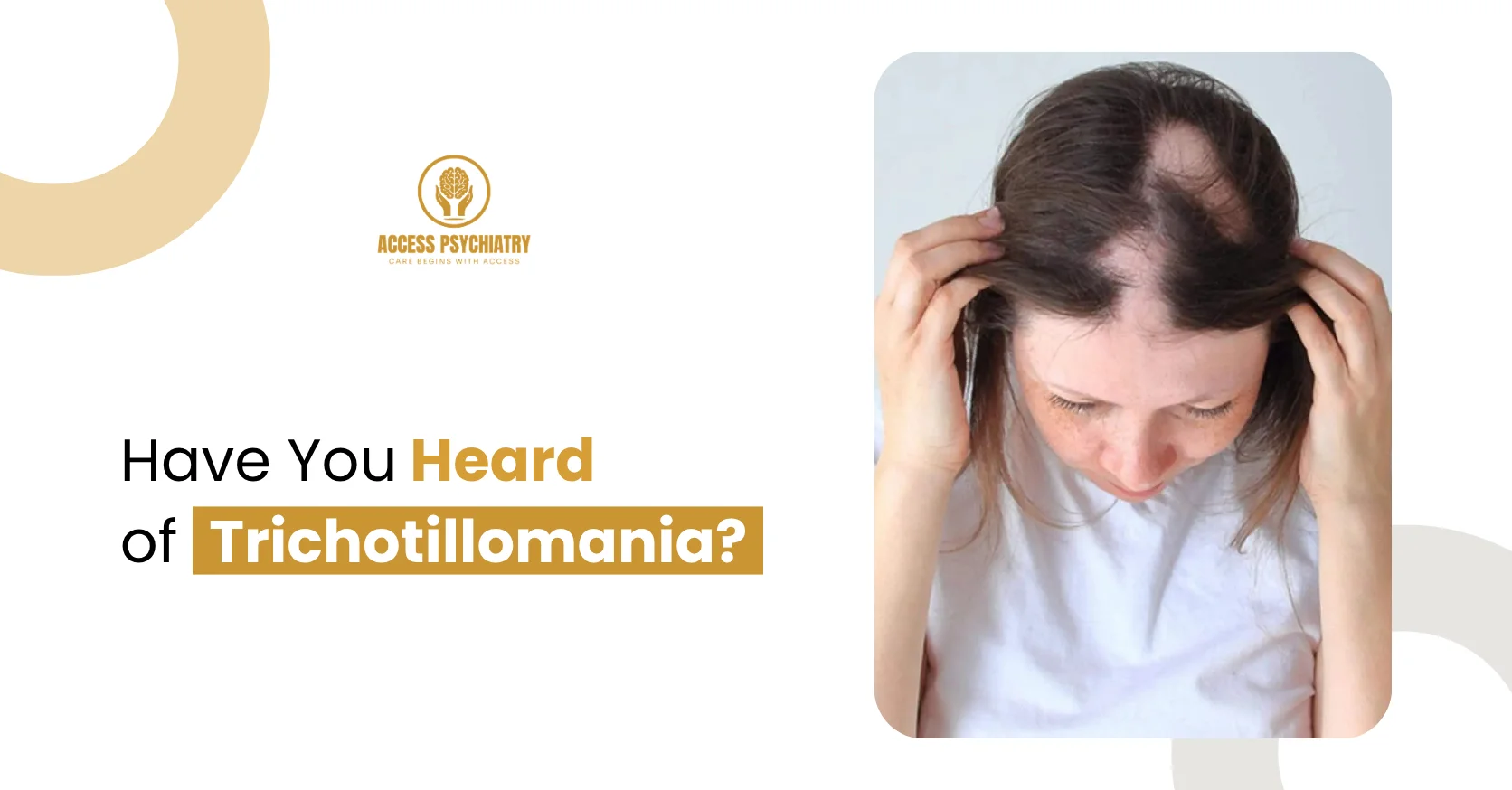
Trichotillomania (pronounced trik-oh-til-oh-MAY-nee-uh), also known as hair-pulling disorder, is a recognized mental health condition characterized by repeated hair pulling that causes hair loss, despite attempts to reduce or stop the behavior.
Children may pull hair from their scalp, eyebrows, eyelashes, or other parts of their bodies.
Some do it when they feel anxious, overwhelmed, or frustrated. Others pull their hair while watching television, studying, reading, or simply relaxing—sometimes without realizing it.
This is not necessarily attention-seeking behavior, disobedience, or a lack of discipline.
For children with trichotillomania, the urge to pull hair can become extremely difficult to resist.
The Statistics Every Parent Should Know
Here is something that may surprise you.
Research suggests that approximately 1%–2% of people experience trichotillomania, although estimates vary across studies and populations.
A large U.S. study involving more than 10,000 adults found that approximately 1.7% met criteria for current trichotillomania.
But perhaps the most important fact for parents is this:
Trichotillomania commonly begins between ages 10 and 13.
That means symptoms may first appear as children enter middle school, navigate puberty, develop friendships, and become increasingly conscious of their appearance.
Both boys and girls can be affected, and symptoms may continue into adulthood without appropriate intervention.
These statistics remind us that a behavior many parents have never heard of can affect children during some of their most emotionally vulnerable years.
Six Warning Signs You Should Not Ignore
Parents, pay attention if you notice:
1. Unexplained hair loss: Bald patches, thinning hair, or missing eyelashes and eyebrows.
2. Frequent hair pulling or twisting: Especially while studying, watching television, or preparing for bed.
3. Attempts to hide hair loss: Wearing hats, scarves, or particular hairstyles more frequently.
4. Changes in confidence: Avoiding photographs, social activities, or situations where others might notice.
5. Embarrassment or secrecy: Becoming defensive or uncomfortable when asked about their hair.
6. Repeated attempts to stop: Promising not to pull their hair again but struggling to maintain control.
Important: Not all childhood hair loss is caused by trichotillomania. Medical conditions such as alopecia areata, scalp infections, and other dermatological problems can produce similar symptoms. A professional evaluation is necessary.
Why Would a Child Pull Out Their Own Hair?
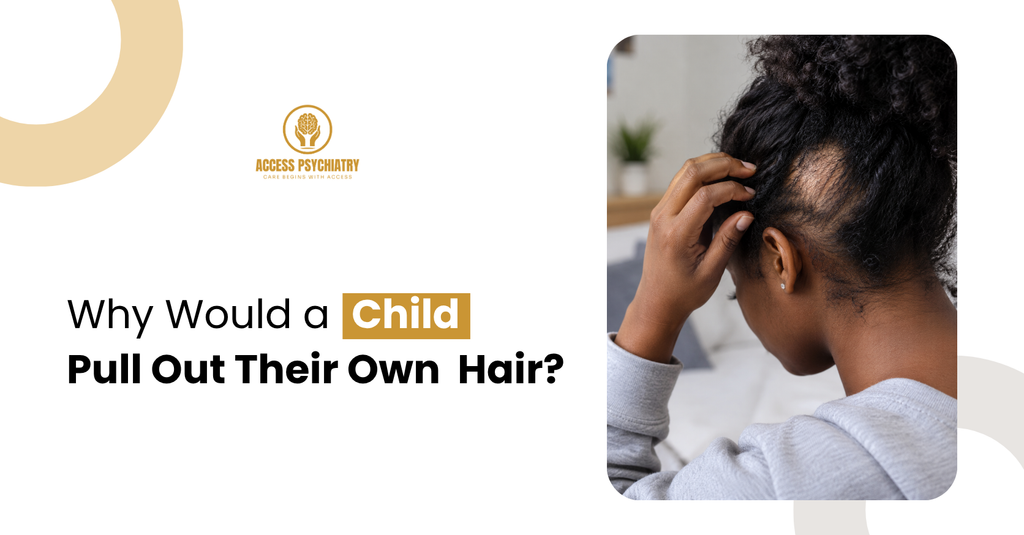
This is where many parents become confused.
Hair pulling is not always a deliberate decision.
For some children, it becomes a way of temporarily relieving emotional tension. For others, it is an automatic behavior associated with boredom, concentration, or particular physical sensations.
The pattern may develop into a repetitive cycle:
Stress or an uncomfortable sensation → Urge to pull → Hair pulling → Temporary relief → Frustration or embarrassment → Repeated pulling.
Imagine a 12-year-old girl who pulls her hair while completing homework. She may not notice what she is doing until she sees strands of hair on her desk.
Later, she feels embarrassed and promises herself she will stop.
But the following evening, the behavior returns.
The problem is not necessarily that she refuses to stop. She may need help learning how to stop.
What Parents Often Miss: The Emotional Impact
The most concerning consequences are not always the missing strands of hair.
For some children, the emotional burden can be significant.
Imagine your daughter refusing to attend a birthday party because she is embarrassed about her thinning eyebrows.
Imagine your son avoiding the school swimming pool because he fears classmates will notice a bald patch.
Imagine a teenager looking in the mirror every morning, feeling ashamed of a behavior they have repeatedly tried to control.
Trichotillomania may contribute to anxiety, low self-esteem, social withdrawal, and difficulties with school or relationships.
Sometimes, what appears to be a small habit is causing a much larger emotional struggle.
Parents, Please Avoid These Three Mistakes
1. Do not punish or shame your child.
Punishment does not treat trichotillomania and may increase embarrassment or secrecy.
2. Do not repeatedly demand that your child “just stop.”
Children with this condition may already be trying very hard to control the behavior.
3. Do not ignore persistent symptoms.
Repeated hair pulling that causes hair loss or emotional distress deserves professional attention.
Instead, consider saying:
“I’ve noticed you’ve been pulling your hair. You’re not in trouble, and I’m not upset with you. I want to understand what you’re experiencing so we can find a way to help you together.”
A compassionate conversation may be the beginning of meaningful change.
Can Trichotillomania Be Treated?
Yes. Effective treatment is available.
One of the most evidence-supported treatments is Cognitive Behavioral Therapy (CBT), particularly Habit Reversal Training (HRT).
This specialized behavioral therapy helps children recognize their pulling patterns, identify triggers, and practice alternative responses when urges arise.
Parents may also learn strategies to support their child’s progress without increasing pressure or shame.
Although there are currently no FDA-approved medications specifically for trichotillomania, psychiatric medication may be appropriate when a child has coexisting conditions such as anxiety or depression.
Treatment should always be individualized according to the child’s age, symptoms, and clinical needs.
How Access Psychiatry Can Help Your Family
At Access Psychiatry, we believe that understanding a child’s behavior is just as important as recognizing the symptoms.
Our practice provides compassionate, evidence-informed psychiatric care for children and adolescents within our scope of services.
We help families through comprehensive psychiatric evaluations, individualized treatment planning, parent education, behavioral support, and medication management when clinically appropriate.
When specialized habit reversal therapy is indicated, we can also help families explore appropriate treatment resources and referrals.
Our goal is to help parents understand what their children may be experiencing while supporting each child’s emotional well-being, confidence, and quality of life.
A Final Message from Dr. Safari
Dear Parents,
Not every childhood struggle comes with tears, complaints, or a request for help.
Sometimes, children communicate their distress through behaviors they cannot explain.
A child pulling their hair may not be seeking attention. A teenager hiding behind a hairstyle may be concealing more than missing hair.
As parents, we naturally want to correct what concerns us. But sometimes, before correcting a behavior, we must first understand the child experiencing it.
Pay attention to the behaviors you do not understand. Ask questions before making assumptions. Offer compassion before criticism.
Your awareness today may help your child receive the support they need tomorrow.
Because behind every behavior is a child who deserves to be understood not judged.
Dr. Safari, DNP, APRN, PMHNP-BC
Is Your Child Showing Any of These Signs?
You do not have to wait until hair loss becomes severe or your child begins withdrawing from everyday activities.
Early recognition and appropriate treatment can make a meaningful difference.
Access Psychiatry LLC
Compassionate Care. Evidence-Based Treatment. Supporting Families.
Serving Maryland and Washington, DC.
Schedule a Psychiatric Evaluation:
www.accesstopsychiatry.com
Helping families understand what children cannot always explain.