
By Dr. Mapendo K. Safari, DNP, APRN, PMHNP-BC
Founder, Access Psychiatry
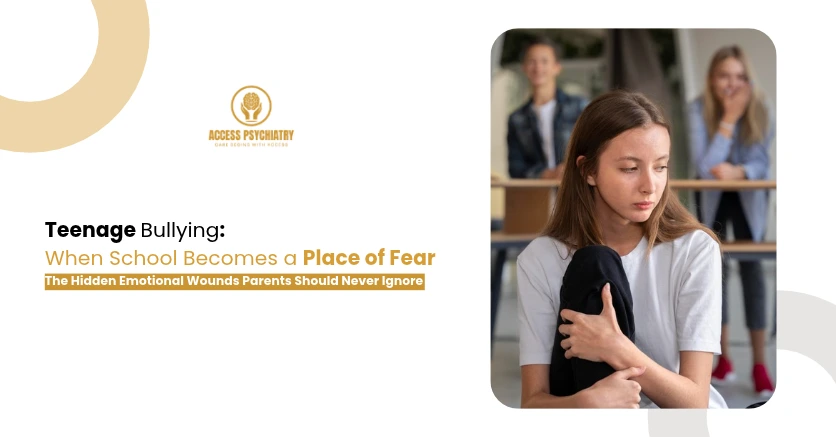
What happens when the place your child goes to learn becomes the place, they fear the most?
Imagine your teenager waking up on a Monday morning with a stomachache. They refuse breakfast, become unusually quiet, and beg to stay home.
You assume they are tired, stressed about an exam, or simply avoiding school.
But what if the real reason is something they are too frightened or embarrassed to tell you?
What if every school day means being laughed at, excluded, threatened, or humiliated by classmates?
For some teenagers, school is no longer a place of learning, friendship, and discovery. It has become a place of anxiety, loneliness, and emotional distress.
Bullying is not simply a childhood disagreement. Repeated bullying can have serious consequences for a teenager’s mental health, self-esteem, academic performance, and sense of safety.
At Access Psychiatry, we recognize the growing need for mental health support among teenagers experiencing bullying, peer rejection, anxiety, and emotional distress. Every young person who reaches out for help deserves to be heard, believed, and supported.
The Statistics: How Common Is Teenage Bullying?
Bullying remains a significant public health concern in the United States.
According to the Centers for Disease Control and Prevention (CDC):
- 34% of teenagers ages 12–17 reported experiencing bullying during the previous 12 months, based on national data collected from July 2021 through December 2023.
- 19% of U.S. high school students reported being bullied at school in 2023, compared with 15% in 2021.
- 16% of high school students reported experiencing electronic bullying in 2023.
- Teenagers who experienced bullying were nearly twice as likely to report recent symptoms of anxiety or depression as those who were not bullied.
These findings show that bullying affects a substantial number of teenagers. They also reveal an important concern: school bullying increased between 2021 and 2023, even as some measures of adolescent mental health showed improvement.
Behind these statistics are real children who may be suffering in silence.
What Is Bullying?
Bullying involves unwanted aggressive behavior, an actual or perceived imbalance of power, and behavior that is repeated or likely to be repeated.
It can occur in classrooms, hallways, cafeterias, locker rooms, school buses, athletic activities, and online.
Bullying takes several forms.
Verbal bullying: Repeated name-calling, insults, threats, humiliation, or hurtful comments about someone’s appearance, background, or abilities.
Social bullying: Deliberately excluding someone, spreading rumors, encouraging others to reject them, or damaging their friendships and reputation.
Physical bullying: Hitting, pushing, intimidating, or repeatedly damaging or taking someone’s belongings.
Cyberbullying: Sending threatening messages, sharing embarrassing pictures, posting humiliating comments, creating fake accounts, or using group chats to target someone.
Not every disagreement between teenagers is bullying. However, even a single serious incident of harassment, threats, or violence deserves attention and an appropriate response.
When Bullying Follows Your Teenager Home
In previous generations, some bullying ended when the school day was over.
Today, smartphones and social media can allow harassment to continue long after a teenager leaves school.
Imagine a 15-year-old girl who discovers that classmates have created a group chat to make fun of her appearance.
They share her photographs, post insulting comments, and encourage others to laugh at her.
By the following morning, she is terrified to walk into school.
She begins avoiding friends, checking her phone repeatedly, and questioning her appearance.
Eventually, she stops participating in activities she once enjoyed.
The bullying may be happening on a screen, but the emotional suffering is real.
Cyberbullying can be particularly distressing because humiliating content may spread quickly, remain accessible, and reach a large audience.
For a teenager still developing their identity and self-confidence, these experiences can be deeply painful.
The Mental Health Consequences of Bullying
Bullying can affect far more than a teenager’s confidence.
Research consistently identifies associations between bullying victimization and increased mental health difficulties.
1. Anxiety and School Avoidance
Teenagers experiencing bullying may develop persistent worry about attending school, interacting with classmates, or encountering those who intimidate them.
Some experience panic symptoms, nausea, headaches, or stomachaches before school.
Others begin missing classes or asking to stay home.
2. Depression and Low Self-Esteem
Repeated humiliation and rejection can contribute to feelings of sadness, worthlessness, loneliness, and hopelessness.
A teenager may begin believing the hurtful statements made by others.
Over time, their confidence may decline, and they may withdraw from activities and relationships.
3. Sleep Problems
Emotional distress can interfere with sleep.
Teenagers may experience difficulty falling asleep, frequent awakenings, nightmares, or excessive worry about what will happen the following day.
Poor sleep can further affect concentration, emotional regulation, and academic performance.
4. Academic Difficulties
A student who feels unsafe may struggle to focus on lessons or complete assignments.
Declining grades missed school days, and reduced participation may reflect emotional distress rather than a lack of motivation.
5. Self-Harm and Suicidal Thoughts
In severe situations, bullying may contribute to significant emotional suffering and increased risk of self-harm or suicidal thoughts.
Bullying is not the sole cause of suicide or self-harm. These outcomes involve multiple interacting factors. However, bullying is an important risk factor that should never be dismissed.
Any teenager expressing suicidal thoughts, hopelessness, or an intention to harm themselves needs prompt professional assessment.
Warning Signs Parents Should Never Ignore
Not every teenager will openly say, “I am being bullied.”
Some feel ashamed. Others fear retaliation, believe adults will not help, or worry that reporting the problem will make it worse.
Parents and caregivers should pay attention to unexplained changes in behavior, including:
- Suddenly refusing to attend school
- Frequent headaches or stomachaches before school
- Becoming unusually quiet, withdrawn, or irritable
- Crying without explaining why
- Losing interest in friendships or favorite activities
- Declining academic performance
- Changes in sleep or appetite
- Avoiding their phone or becoming visibly distressed after checking messages
- Unexplained injuries or missing belongings
- Negative statements about their appearance or self-worth
These symptoms do not automatically mean a teenager is being bullied. They may also indicate other emotional, medical, or developmental concerns.
However, persistent behavioral changes deserve a compassionate conversation and, when indicated, professional evaluation.
What Parents Can Do When Their Teenager Is Being Bullied
One of the most important protective factors in a teenager’s life is knowing that a trusted adult will listen and respond.
Listen Without Judgment
If your teenager tells you they are being bullied, avoid minimizing their experience.
Statements such as “Just ignore them,” “Be stronger,” or “Everyone gets teased” may unintentionally make them feel dismissed.
Instead, say:
“I am glad you told me. You do not deserve to be treated this way, and we are going to work together to keep you safe.”
Take the Situation Seriously
Ask calm, open-ended questions about what happened, how often it occurs, who is involved, and whether your teenager feels safe.
Avoid blaming your child or assuming they must have done something to provoke the behavior.
Work With the School
Contact the appropriate school personnel, such as a teacher, school counselor, administrator, or designated bullying prevention coordinator.
Describe the incidents clearly and request a specific safety plan.
Follow up to ensure the school has taken appropriate action and that the bullying has stopped.
Document What Happens
Keep a record of concerning incidents, including dates, locations, witnesses, and the impact on your teenager.
For cyberbullying, preserve relevant screenshots or messages before blocking or reporting accounts.
Strengthen Emotional Support
Encourage healthy friendships, family connection, enjoyable activities, and access to trusted adults.
Do not pressure your teenager to confront someone who is threatening or intimidating them.
Their safety must come first.
When Should Parents Seek Professional Mental Health Support?
Professional help may be appropriate when bullying contributes to persistent anxiety, sadness, school refusal, sleep disturbances, social withdrawal, declining functioning, or changes in behavior.
A psychiatric evaluation can help determine whether the teenager is experiencing an anxiety disorder, depression, trauma-related symptoms, or another mental health concern.
Early assessment is important because emotional difficulties can become more severe when left unaddressed.
Evidence-Based Treatment Options
Cognitive Behavioral Therapy (CBT) can help teenagers recognize unhelpful thought patterns, manage anxiety, develop coping skills, and rebuild confidence.
Supportive psychotherapy provides a safe environment for teenagers to express difficult emotions, process experiences, and strengthen their ability to seek support.
Family involvement can improve communication, reinforce emotional safety, and help caregivers respond effectively to distress.
School-based interventions are essential for addressing the bullying itself. Mental health treatment should not place the responsibility for stopping bullying on the teenager experiencing it.
Medication management may be considered when a comprehensive psychiatric evaluation identifies a coexisting condition, such as moderate to severe depression or an anxiety disorder, for which medication is clinically indicated.
Medication does not treat bullying itself.
The most effective approach addresses both the teenager’s emotional needs and the environment contributing to their distress.
The Growing Need for Teenage Mental Health Support at Access Psychiatry
At Access Psychiatry, we recognize the increasing importance of providing accessible psychiatric care for teenagers struggling with school-related stress, bullying, social rejection, anxiety, and depression.
We are seeing the need for support reflected in the concerns brought to psychiatric care by teenagers and their families.
Behind every appointment is a young person whose emotional experience deserves attention.
Some teenagers struggle to explain what they are feeling. Others have carried their distress for months before finding the courage to speak.
We deeply value the trust that teenagers and families place in us when they seek help.
Our approach emphasizes compassionate psychiatric evaluation, individualized treatment, psychotherapy, medication management when clinically appropriate, and collaboration with families and other supports.
Our goal is not simply to reduce symptoms. It is to help teenagers feel heard, rebuild confidence, strengthen emotional resilience, and regain a sense of safety and hope.
Seeking professional support is not a sign of weakness. It is an important step toward understanding and addressing emotional suffering.
A Message to Teenagers Experiencing Bullying
If someone repeatedly makes fun of you, excludes you, humiliates you, or makes you feel that you do not belong, please remember:
Their behavior does not determine your worth.
You do not have to change your appearance, personality, or identity to deserve kindness and respect.
You are not weak for feeling hurt.
You are not alone because someone has made you feel unwanted.
And you do not have to carry your pain in silence.
Tell someone you trust. Ask for help. Keep speaking until someone listens and takes action.
You deserve to feel safe at school, respected by others, and supported in your emotional well-being.
If you are experiencing suicidal thoughts or feel unable to stay safe, tell a trusted adult immediately. In the United States, call or text 988 for crisis support, or call 911 if there is immediate danger.
How Access Psychiatry Can Help
Access Psychiatry provides individualized mental health services for adolescents and adults in Maryland and Washington, DC.
Our services include psychiatric evaluations, psychotherapy, medication management when appropriate, and education for patients and families.
If your teenager is experiencing anxiety, depression, emotional distress, or school avoidance related to bullying, a professional evaluation can help identify appropriate next steps.
Early support can make a meaningful difference.
Schedule an appointment with Access Psychiatry.
Website: www.accesstopsychiatry.com
A Note from Dr. Safari
“A child should never have to choose between receiving an education and protecting their emotional well-being. Behind every quiet teenager may be a story we have not yet heard. Listen before you judge, support before you criticize, and never underestimate the healing power of making a young person feel safe, valued, and understood.”
Dr. Mapendo K. Safari, DNP, APRN, PMHNP-BC
Sources and Clinical References
- Centers for Disease Control and Prevention (CDC). (2024). Youth Risk Behavior Survey Data Summary & Trends Report: 2013–2023. National findings on school bullying, electronic bullying, and adolescent mental health.
- Haile, G., Arockiaraj, B., Zablotsky, B., & Ng, A. E. (2024). Bullying Victimization Among Teenagers: United States, July 2021–December 2023. National Center for Health Statistics, Data Brief No. 514.
- Centers for Disease Control and Prevention (CDC). (2024). Mental Health and Suicide Risk Among High School Students and Protective Factors—Youth Risk Behavior Survey, United States, 2023. Morbidity and Mortality Weekly Report.
- Centers for Disease Control and Prevention (CDC). (2024). Frequent Social Media Use and Experiences With Bullying Victimization, Persistent Feelings of Sadness or Hopelessness, and Suicide Risk Among High School Students—United States, 2023. Morbidity and Mortality Weekly Report.
- U.S. Department of Health and Human Services. StopBullying.gov. Federal resources on bullying prevention, cyberbullying, and responding to bullying.