
What Science Reveals About Nutrition, Brain Health, and the Safe Use of Supplements
Written by Dr. Mapendo K. Safari, DNP, APRN, PMHNP-BC
Founder & CEO of Access Psychiatry
Could Something Missing from Your Diet Be Affecting How You Feel?
Imagine waking up exhausted despite getting enough sleep.
You struggle to concentrate at work, feel unusually irritable, and notice that activities you once enjoyed no longer bring the same satisfaction.
You begin to wonder whether you are experiencing depression, anxiety, burnout, or simply the effects of a demanding lifestyle.
But what if a nutritional deficiency is contributing to some of these symptoms?
Many factors influence mental health, including genetics, brain chemistry, physical health, life experiences, sleep, nutrition, and environmental stress.
While psychiatric medications and psychotherapy remain important evidence-based treatments for many mental health conditions, nutritional health also deserves attention.
Certain vitamins, minerals, and fatty acids are essential for normal brain function. Deficiencies may contribute to fatigue, cognitive difficulties, mood changes, or other symptoms that affect emotional well-being.
This raises an important question:
Can dietary supplements improve mental health, and how do we know which ones are worth considering?
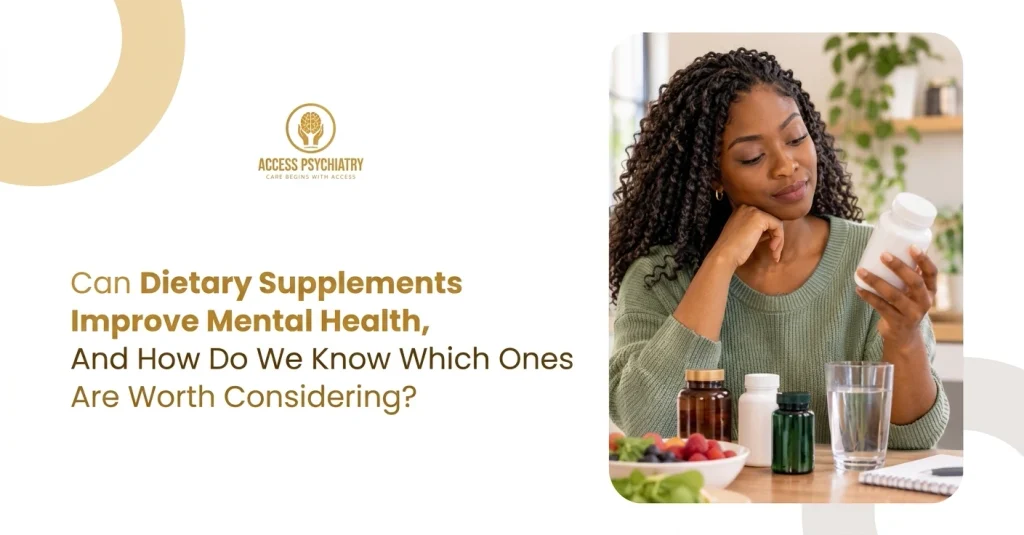
The answer is more complicated than supplement advertisements often suggest.
Some supplements may be beneficial in specific circumstances. Others have limited evidence, and certain products can cause serious adverse effects or interact with psychiatric medications.
Understanding the difference is essential.
1. Understanding the Connection Between Nutrition and Mental Health
The brain requires a continuous supply of nutrients to function properly.
Vitamins and minerals participate in processes involving energy production, nerve signaling, cellular maintenance, and the synthesis of neurotransmitters.
Neurotransmitters are chemical messengers that help nerve cells communicate. They play important roles in attention, motivation, sleep, and emotional regulation.
For example:
- Vitamin B12 supports normal nervous system function and red blood cell formation.
- Folate (vitamin B9) participates in cellular processes involved in neurotransmitter production.
- Iron is important for oxygen transport and normal cognitive functioning.
- Omega-3 fatty acids are structural components of cell membranes, including those in the brain.
- Magnesium participates in numerous biochemical reactions, including those involved in normal nerve and muscle function.
- Vitamin D supports several physiological processes, although its role in treating psychiatric disorders remains uncertain.
These nutrients are important for health, but an important distinction must be made:
A nutrient being essential for brain function does not automatically mean taking more of it will improve a psychiatric condition.
Supplementation is most clearly beneficial when it corrects a documented deficiency or addresses a specific clinical need.
For individuals who already have adequate nutrient levels, additional supplementation may provide little benefit and, in some cases, cause harm.
2. Omega-3 Fatty Acids: Can Fish Oil Support Mood and Brain Health?
Omega-3 fatty acids are among the most widely studied nutritional supplements in mental health research.
Two important forms are:
EPA (eicosapentaenoic acid) and DHA (docosahexaenoic acid).
These fatty acids are found primarily in fatty fish, including salmon, sardines, and mackerel.
They contribute to normal cell membrane structure and other physiological processes relevant to brain health.
What does the research show?
Researchers have investigated omega-3 supplementation for depression, ADHD, and several other psychiatric conditions.
Some studies suggest that EPA-rich formulations may provide modest additional benefits for certain adults with depression when used alongside standard treatment.
However, other high-quality reviews have found inconsistent results or effects that may be too small to be clinically meaningful.
For ADHD, research has also produced mixed findings. Omega-3 supplements have not demonstrated the consistent effectiveness of established ADHD medications.
Therefore, omega-3 supplementation should not be presented as a replacement for antidepressants, ADHD medications, or psychotherapy.
Who might benefit?
Individuals with limited dietary intake of omega-3 fatty acids may benefit from discussing their nutritional needs with a health care professional.
For some patients receiving treatment for depression, omega-3 supplementation may be considered as an adjunct after reviewing the available evidence, medical history, and potential risks.
Clinical takeaway: Omega-3 fatty acids are important nutrients, but their effectiveness as psychiatric treatments remains uncertain.
3. Vitamin D: Is There a Connection Between Low Vitamin D and Depression?
Vitamin D is commonly associated with bone health, but researchers have also investigated its relationship with mood and brain function.
Some observational studies have found that individuals with low vitamin D levels experience higher rates of depressive symptoms.
However, an association does not establish that low vitamin D causes depression.
Other factors, including chronic illness, reduced outdoor activity, and lifestyle differences, may contribute to the relationship.
Does taking vitamin D improve depression?
Clinical trials have not consistently demonstrated that vitamin D supplementation prevents depression or significantly improves depressive symptoms.
Nevertheless, identifying and correcting vitamin D deficiency remains important for overall health.
Individuals with certain dietary patterns, medical conditions, limited sun exposure, or other risk factors may require evaluation.
An important consideration
Taking high doses of vitamin D without medical guidance can lead to excessive calcium levels and other complications.
Clinical takeaway: Correcting vitamin D deficiency is appropriate when indicated, but vitamin D should not be considered a proven stand-alone treatment for depression.
4. Vitamin B12 and Folate: When Nutritional Deficiencies Affect Emotional Health
Vitamin B12 and folate are essential for normal nervous system function.
A deficiency in vitamin B12 may contribute to symptoms such as:
- Fatigue and weakness
- Difficulty concentrating
- Memory problems
- Confusion
- Depressive symptoms
- Numbness, tingling, or other neurological changes
These symptoms can sometimes resemble or complicate psychiatric conditions.
Who may be at risk for vitamin B12 deficiency?
Risk factors include certain gastrointestinal disorders, impaired nutrient absorption, some medications, and dietary patterns that exclude animal-derived foods without adequate supplementation.
Consider an older adult who develops increasing fatigue, forgetfulness, and low mood.
Although these symptoms warrant a mental health assessment, a medical evaluation may also identify vitamin B12 deficiency.
Correcting the deficiency is important because untreated vitamin B12 deficiency can cause neurological injury.
What about folate?
Folate is another essential B vitamin.
Researchers have studied L-methylfolate, a biologically active form of folate, as an additional treatment for major depressive disorder.
Some clinical guidelines provisionally support its use as an adjunct in selected patients, particularly when standard antidepressant treatment has produced an incomplete response.
However, the evidence does not justify recommending high-dose L-methylfolate to everyone with depression.
Distinguish it from routine folic acid supplementation and use high doses under clinical oversight.
Clinical takeaway: Evaluating and correcting vitamin deficiencies can be important in mental health care. Specialized folate supplementation may help select patients, but it is not appropriate for everyone.
5. Magnesium: Does It Really Help With Anxiety and Sleep?
Magnesium supports normal nerve function, muscle activity, and many biochemical processes.
It is frequently promoted online as a natural solution for anxiety, insomnia, and stress.
But what does the evidence support?
Some small studies have reported improvements in anxiety-related symptoms or sleep measures with magnesium supplementation.
However, the overall research is limited by differences in study design, supplement formulations, participant characteristics, and outcome measures.
At present, magnesium is not an established treatment for anxiety disorders or chronic insomnia.
When might magnesium supplementation be appropriate?
Supplementation may be useful for individuals with inadequate magnesium intake or a clinically identified deficiency.
Magnesium is naturally found in foods such as leafy vegetables, nuts, seeds, legumes, and whole grains.
Excessive supplemental magnesium can cause diarrhea and other adverse effects. People with impaired kidney function may be particularly vulnerable to magnesium accumulation.
Clinical takeaway: Magnesium is essential for health, but claims that it reliably treats anxiety or insomnia are stronger than the current evidence supports.
6. Melatonin: A Supplement That May Help Certain Sleep Problems
Sleep and mental health are closely connected.
Poor sleep can worsen emotional regulation, concentration, irritability, and overall functioning.
Melatonin is a hormone produced by the body that helps regulate the sleep-wake cycle.
Supplemental melatonin may be useful for certain circadian rhythm problems, including jet lag and some difficulties with sleep timing.
There is also limited evidence supporting its use for sleep-onset difficulties in some children with ADHD.
However, melatonin is not a universal treatment for insomnia.
For chronic insomnia, cognitive behavioral therapy for insomnia (CBT-I) is generally recommended as a first-line treatment.
Important safety considerations
Melatonin products can vary in their actual ingredient content.
Potential adverse effects include daytime drowsiness, headache, dizziness, and nausea.
Long-term safety data remain limited, particularly in children.
Parents should not routinely give children melatonin without discussing the need, dose, and safety considerations with a qualified clinician.
Clinical takeaway: Melatonin may help with selected sleep problems, but persistent insomnia requires evaluation of its underlying causes.
7. Herbal Supplements: Natural Does Not Always Mean Safe
Herbal products are often marketed as gentler alternatives to psychiatric medications.
However, plant-derived products contain biologically active compounds that can affect the body and interact with medications.
Ashwagandha
Ashwagandha is frequently promoted for stress reduction and sleep.
Some small studies suggest that certain preparations may improve perceived stress or sleep outcomes.
However, the evidence for treating anxiety disorders remains unclear, and long-term safety is not well established.
Rare cases of liver injury have been reported. Ashwagandha may also affect thyroid function and interact with medications.
It is not appropriate for everyone, particularly during pregnancy or in certain medical conditions.
Lavender
Some studies suggest that specific oral lavender oil preparations may reduce anxiety symptoms.
However, study limitations mean that conclusions about effectiveness remain uncertain.
Oral lavender products can cause gastrointestinal symptoms and may interact with sedating medications.
Results from studies of one standardized preparation should not automatically be applied to every lavender supplement or essential oil.
St. John’s Wort
St. John’s wort has been studied for depression, and some research suggests benefits in mild-to-moderate cases.
However, findings are not entirely consistent, and its potential for medication interactions is particularly concerning.
St. John’s wort can reduce the effectiveness of certain medications, including some hormonal contraceptives, and can interact dangerously with antidepressants and other serotonergic medications.
It may also contribute to mania or hypomania in susceptible individuals.
Clinical takeaway: Herbal supplements should be reviewed as carefully as prescription medications, especially when a patient has bipolar disorder or takes psychiatric medication.
8. Can Supplements Help With ADHD, Anxiety, Depression, or Bipolar Disorder?
The usefulness of supplementation depends on the diagnosis and the individual.
Depression
Some nutritional interventions have been studied as adjunctive treatments.
Omega-3 fatty acids and L-methylfolate are examples, but their evidence and appropriate clinical uses differ.
Correcting deficiencies in vitamin B12, iron, or other nutrients may improve symptoms related to those deficiencies.
However, supplements are not substitutes for evidence-based depression treatment when psychotherapy, medication, or other interventions are indicated.
Anxiety Disorders
Research on magnesium, lavender, ashwagandha, and other supplements remains limited or inconsistent.
Certain products may help some individuals with stress-related symptoms, but this does not establish them as effective treatments for generalized anxiety disorder, panic disorder, or other anxiety disorders.
Psychotherapy, particularly cognitive behavioral therapy, and appropriate medication remain established treatment options.
ADHD
Omega-3 fatty acids and several other supplements have been investigated for ADHD.
Current evidence does not support replacing established ADHD treatment with nutritional supplements.
For children, adolescents, and adults, treatment may include medication, behavioral interventions, organizational strategies, and appropriate educational or workplace supports.
Bipolar Disorder
People with bipolar disorder should be especially cautious about products marketed to increase energy, elevate mood, or improve motivation.
Some supplements may contribute to mood activation or interact with mood stabilizers and other psychiatric medications.
For example, St. John’s wort and SAMe raise concerns about mood destabilization in susceptible individuals.
Supplements should not replace prescribed mood-stabilizing treatment.
The central principle is that supplements should be considered in the context of the patient’s diagnosis, nutritional status, medications, and overall treatment plan.
9. Why Taking More Supplements Is Not Always Better
It is easy to assume that if one vitamin supports brain health, taking several vitamins together must provide even greater benefits.
Unfortunately, the body does not always work that way.
Excessive supplementation can create new health problems.
For example:
- High doses of vitamin D can cause toxicity.
- Excessive vitamin B6 intake can lead to nerve damage.
- Iron supplementation without an established need can cause harm.
- Some herbal supplements can affect the liver or interact with prescription medications.
- Products marketed for mood, energy, or sleep may contain multiple ingredients with overlapping effects.
Another important issue is product quality.
In the United States, dietary supplements generally do not require FDA approval for safety and effectiveness before entering the market.
This means that a product being available online or in a pharmacy does not establish that it is effective, safe for every individual, or appropriate for treating a psychiatric condition.
Independent quality verification may help assess whether a product contains its labeled ingredients, but it does not prove that the supplement treats a mental health disorder.
More supplements do not necessarily mean better mental health care.
Sometimes, the safest and most effective decision is not to add another product.
10. Before Starting a Supplement, Ask These Five Questions
1. Why am I taking this supplement?
Is there a documented deficiency, a specific medical indication, or reliable evidence supporting its use?
2. Could it interact with my medications?
Supplements may interact with antidepressants, mood stabilizers, blood thinners, sedatives, and other medications.
3. Is the product supported by quality research?
Personal testimonials and social media advertisements are not substitutes for well-designed clinical studies.
4. Is the dose appropriate for me?
Age, kidney and liver function, pregnancy, medical conditions, and current medications can influence safety.
5. How will we determine whether it is helping?
A clinician can help identify measurable goals, review adverse effects, and determine whether continued use is justified.
These questions encourage thoughtful decisions rather than unnecessary experimentation.
11. The Most Important Supplement Strategy May Begin With a Medical Evaluation
Imagine two individuals experiencing similar symptoms of fatigue, poor concentration, and low mood.
One has major depressive disorder requiring psychiatric treatment.The other has a vitamin B12 deficiency contributing to neurological and emotional symptoms.
A third person may have both conditions.
Although the symptoms overlap, their treatment needs differ.
This is why a comprehensive evaluation matters.
Depending on symptoms, risk factors, and clinical findings, a health care professional may consider testing for nutritional deficiencies, thyroid dysfunction, anemia, or other medical conditions that can contribute to psychiatric symptoms.
Laboratory testing should be individualized rather than automatically ordering every available vitamin or mineral test.
The goal is not simply to find a supplement.
The goal is to understand what may be contributing to the symptoms and identify the most appropriate treatment.
12. How Access Psychiatry Can Help
At Access Psychiatry, we believe that effective mental health care begins with understanding the whole person.
Emotional well-being is influenced by psychological, biological, social, and lifestyle factors.
Our approach considers not only psychiatric symptoms but also the medical and behavioral factors that may affect daily functioning.
Depending on individual needs, our services include comprehensive psychiatric evaluations, individualized treatment planning, medication management, psychotherapy, and patient education.
We also review current medications and supplements, discuss potential interactions, and consider whether medical evaluation or coordination with other health care professionals is appropriate.
When patients express interest in vitamins, nutritional supplements, or other complementary approaches, our goal is to provide balanced, evidence-based information.
We recognize that patients may prefer different treatment approaches.
Our responsibility is to help them understand the available evidence, potential benefits, limitations, and safety considerations so they can participate meaningfully in treatment decisions.
Mental health care should be personalized, compassionate, and guided by science, not marketing claims.
To learn more about our services, visit:
A Message of Encouragement: Caring for Your Mind Means Caring for Your Whole Self
Mental health is not separate from physical health.
The way we sleep, nourish our bodies, manage stress, connect with others, and care for existing medical conditions can influence how we feel emotionally.
Sometimes, improving well-being involves correcting a nutritional deficiency.
Sometimes, it requires psychotherapy, medication, lifestyle changes, or additional medical care.
Often, meaningful improvement comes from combining several appropriate approaches.
You do not need to purchase every supplement advertised as a solution for anxiety, depression, or poor concentration.
You deserve something more valuable: accurate information, thoughtful evaluation, and a treatment plan that reflects your individual needs.
Your mental health is too important to leave to guesswork.
The goal is not to take more supplements. It is to understand what your mind and body truly need.
One day at a time…
Dr. Safari, DNP, PMHNP-BC
Frequently Asked Questions
Can vitamins and supplements improve depression?
Some supplements have been studied for depression, but results are mixed. Correcting a nutritional deficiency can improve symptoms caused or worsened by that deficiency. Certain supplements may have a role as adjunctive treatments in selected patients, but they should not replace established depression treatment without clinical guidance.
What is the best vitamin for anxiety?
There is no single vitamin proven to treat anxiety disorders. A nutritional deficiency may contribute to symptoms in some individuals, but routine supplementation is not an established treatment for anxiety.
Can I take supplements while using antidepressants?
Some supplements can be used safely with certain antidepressants, but others can cause significant interactions. Always discuss new supplements with your prescribing clinician or pharmacist before starting them.
Are natural supplements safer than psychiatric medications?
Not necessarily. Natural products can cause adverse effects, interact with medications, and vary in quality. Their safety depends on the ingredients, dose, individual medical history, and other medications being used.
Should everyone with a mental health condition take supplements?
No. Supplementation should be individualized. Not everyone has a nutritional deficiency, and not every supplement has demonstrated mental health benefits.
Can supplements replace psychiatric medication?
Supplements should not automatically replace prescribed psychiatric medications. Some may be considered as part of a broader treatment plan, but treatment changes should be discussed with the prescribing clinician.
Evidence-Based References
- National Institutes of Health, National Center for Complementary and Integrative Health (NCCIH). 8 Things To Know About Depression and Complementary Health Approaches. Reviews the evidence and safety considerations for supplements and complementary treatments used for depression.
- NCCIH. Omega-3 Supplements: What You Need To Know. Summarizes research on omega-3 fatty acids and mental health conditions, including depression and ADHD.
- NIH Office of Dietary Supplements. Vitamin D: Fact Sheet for Health Professionals. Reviews vitamin D physiology, deficiency, and evidence concerning depression.
- NIH Office of Dietary Supplements. Vitamin B12: Fact Sheet for Consumers. Explains neurological, cognitive, and emotional symptoms associated with vitamin B12 deficiency.
- NCCIH. Anxiety and Complementary Health Approaches. Reviews research involving herbal products, lavender, and other complementary approaches for anxiety.
- NCCIH. Ashwagandha: Usefulness and Safety. Summarizes research on stress and sleep, along with safety considerations.
- NCCIH. Melatonin: What You Need To Know. Reviews indications, limitations, adverse effects, and safety considerations.
- NCCIH. ADHD and Complementary Health Approaches: What the Science Says. Reviews research on omega-3 fatty acids, melatonin, and other complementary interventions.
- U.S. Food and Drug Administration. Questions and Answers on Dietary Supplements. Explains federal oversight, labeling, safety, and the limitations of premarket review.
- World Federation of Societies of Biological Psychiatry and Canadian Network for Mood and Anxiety Treatments. Clinician Guidelines for the Treatment of Psychiatric Disorders With Nutraceuticals and Phytoceuticals. World Journal of Biological Psychiatry, 2022. Reviews evidence for selected supplements as adjunctive treatments.
Medical Disclaimer: This article is intended for educational purposes and does not replace individualized medical advice, diagnosis, or treatment. Dietary supplements can cause adverse effects and interact with prescription medications. Consult a qualified health care professional before beginning, stopping, or combining supplements with psychiatric medications.