
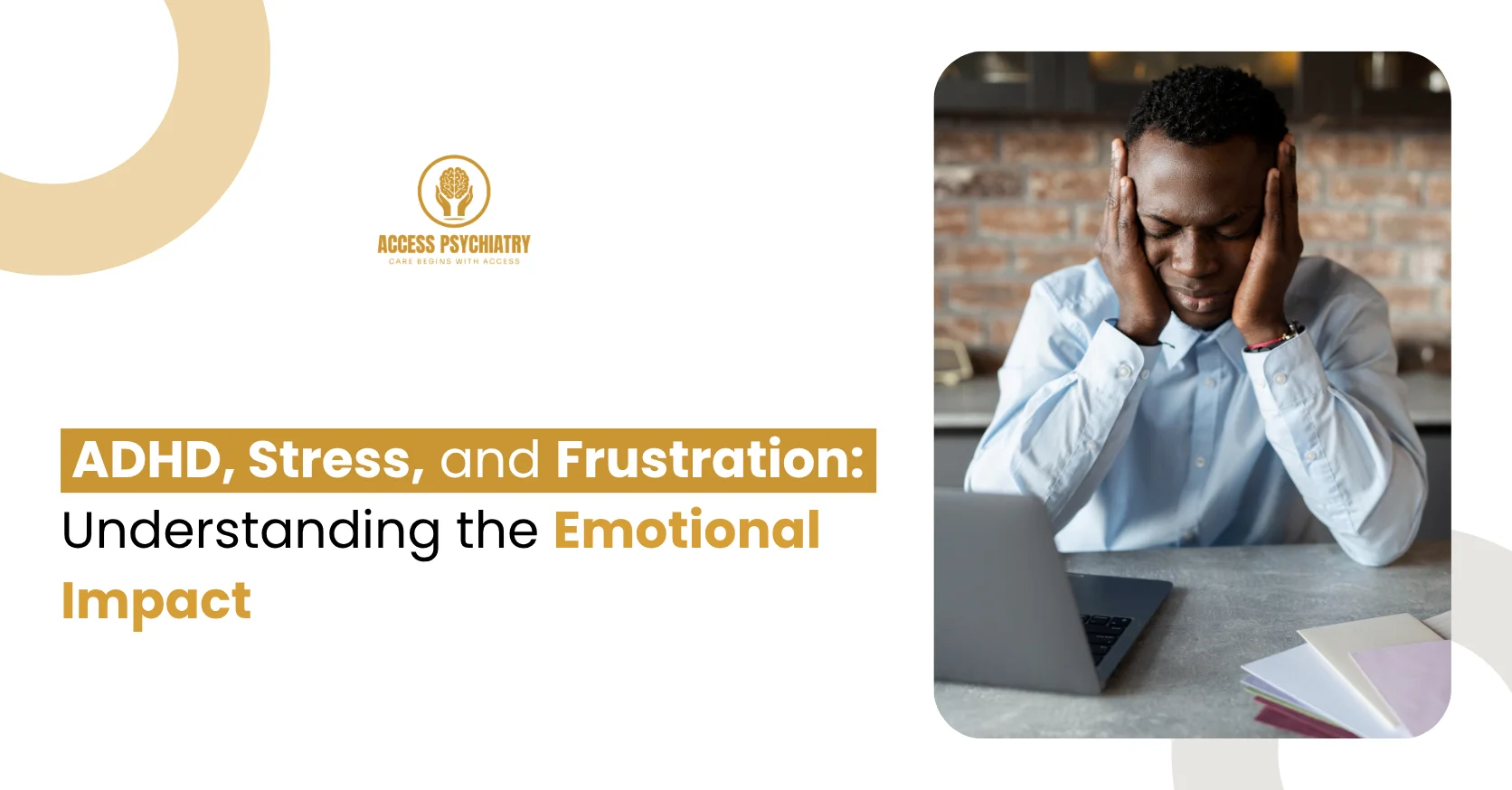
When people think about Attention-Deficit/Hyperactivity Disorder (ADHD), they often think about difficulty focusing, forgetfulness, hyperactivity, or impulsivity. However, ADHD can affect much more than attention. For many children, adolescents, and adults, the everyday challenges associated with ADHD can also contribute to stress, frustration, irritability, and difficulty managing emotions.
Understanding this connection matters because emotional distress can affect relationships, school, work, confidence, and overall quality of life.
What Is ADHD?
ADHD is a neurodevelopmental disorder characterized by persistent patterns of inattention, hyperactivity, and/or impulsivity that interfere with daily functioning.
Depending on the individual, ADHD may make it difficult to:
- Stay focused or complete tasks
- Organize responsibilities
- Manage time effectively
- Remember appointments or daily responsibilities
- Keep track of belongings
- Control impulses
- Sit still or manage restlessness
ADHD is not a sign of laziness, lack of intelligence, or poor motivation. Symptoms begin during childhood, although ADHD may not be recognized or diagnosed until adolescence or adulthood.
How Can ADHD Contribute to Stress?
Managing everyday responsibilities can become stressful when attention, organization, working memory, and time management are difficult.
For example, someone with ADHD may know exactly what needs to be done but struggle with deciding where to begin. Another person may underestimate how long a task will take, become distracted, and then feel overwhelmed when a deadline approaches.
Over time, repeated experiences such as missed appointments, unfinished assignments, forgotten responsibilities, misplaced belongings, or difficulty meeting expectations can create significant stress.
ADHD may also occur alongside conditions such as anxiety, depression, and sleep difficulties, which can further increase emotional distress.
Why Can ADHD Cause So Much Frustration?
Frustration often develops when someone repeatedly tries to accomplish something but encounters obstacles.
A person with ADHD might:
- Lose something they just had
- Forget an important responsibility
- Become distracted before completing a task
- Interrupt someone unintentionally
- Struggle to organize a project
- Know what needs to be done but have difficulty getting started
When these experiences happen repeatedly, people may become frustrated with themselves or begin believing they are incapable of succeeding.
For children and adolescents, repeated correction at home or school can also affect confidence. Adults may experience similar frustration when ADHD interferes with employment, relationships, finances, household responsibilities, or parenting.
ADHD and Emotional Regulation
Emotional dysregulation is commonly discussed in association with ADHD, although it is not itself a core diagnostic criterion for ADHD.
Some people with ADHD report becoming frustrated quickly, experiencing irritability, having difficulty calming down after becoming upset, or reacting more strongly to stressful situations. Adults with ADHD may also experience low frustration tolerance, stress sensitivity, or frequent and intense mood changes.
However, significant anxiety, persistent sadness, severe mood swings, or intense anger should not automatically be attributed to ADHD. These symptoms may indicate another condition occurring alongside ADHD and deserve appropriate evaluation.
The ADHD–Stress Cycle
ADHD and stress can sometimes reinforce one another.
Difficulty concentrating or organizing can lead to unfinished responsibilities. Those unfinished responsibilities create stress, and rising stress can make concentration and organization even harder.
Eventually, some people may feel overwhelmed, exhausted, discouraged, or tempted to avoid tasks altogether.
Recognizing this pattern can be an important first step toward changing it.
Strategies That Can Help
Small, consistent strategies can make everyday responsibilities more manageable.
Break large tasks into smaller steps. Instead of focusing on an entire project, identify the first manageable action and begin there.
Use external reminders. Calendars, alarms, checklists, visual schedules, and phone reminders can reduce the burden of relying entirely on memory.
Create routines. Keeping important items in designated places and developing predictable daily routines can reduce unnecessary decision-making and frustration.
Take purposeful breaks. Brief movement or activity breaks may help with restlessness and give you a chance to reset your attention.
Protect sleep. Poor sleep can worsen attention, irritability, and emotional regulation, so healthy sleep habits are especially important.
Practice self-compassion. ADHD symptoms do not measure intelligence, character, or effort. Effective strategies focus on working with the way a person functions rather than repeatedly criticizing difficulties.
When Professional Treatment May Help
If ADHD symptoms are interfering with school, employment, relationships, parenting, or daily functioning, a comprehensive psychiatric evaluation may be appropriate.
Effective ADHD treatment is individualized and may include medication, behavioral interventions, psychotherapy such as cognitive behavioral therapy, parent education, school-based support, or a combination of approaches. Treatment should also evaluate for conditions that commonly occur alongside ADHD, including anxiety, depression, sleep disorders, and substance-use concerns.
At Access Psychiatry, LLC, we provide individualized psychiatric evaluation and treatment for children, adolescents, and adults. Our goal is not simply to reduce symptoms, but to help patients understand their challenges, develop practical strategies, and improve their overall functioning and quality of life.
Moving Forward
ADHD can contribute to stress and frustration, but these difficulties do not have to define a person’s life. With an accurate diagnosis, appropriate treatment, practical coping strategies, and consistent support, people with ADHD can develop effective ways to manage attention, organization, and emotional challenges.
If ADHD symptoms or emotional difficulties are interfering with your daily life, consider speaking with a qualified mental health professional for a comprehensive evaluation and individualized treatment recommendations.
Dr. Safari, DNP, APRN, CRNP, PMHNP-BC
Founder & CEO of Access Psychiatry, LLC