

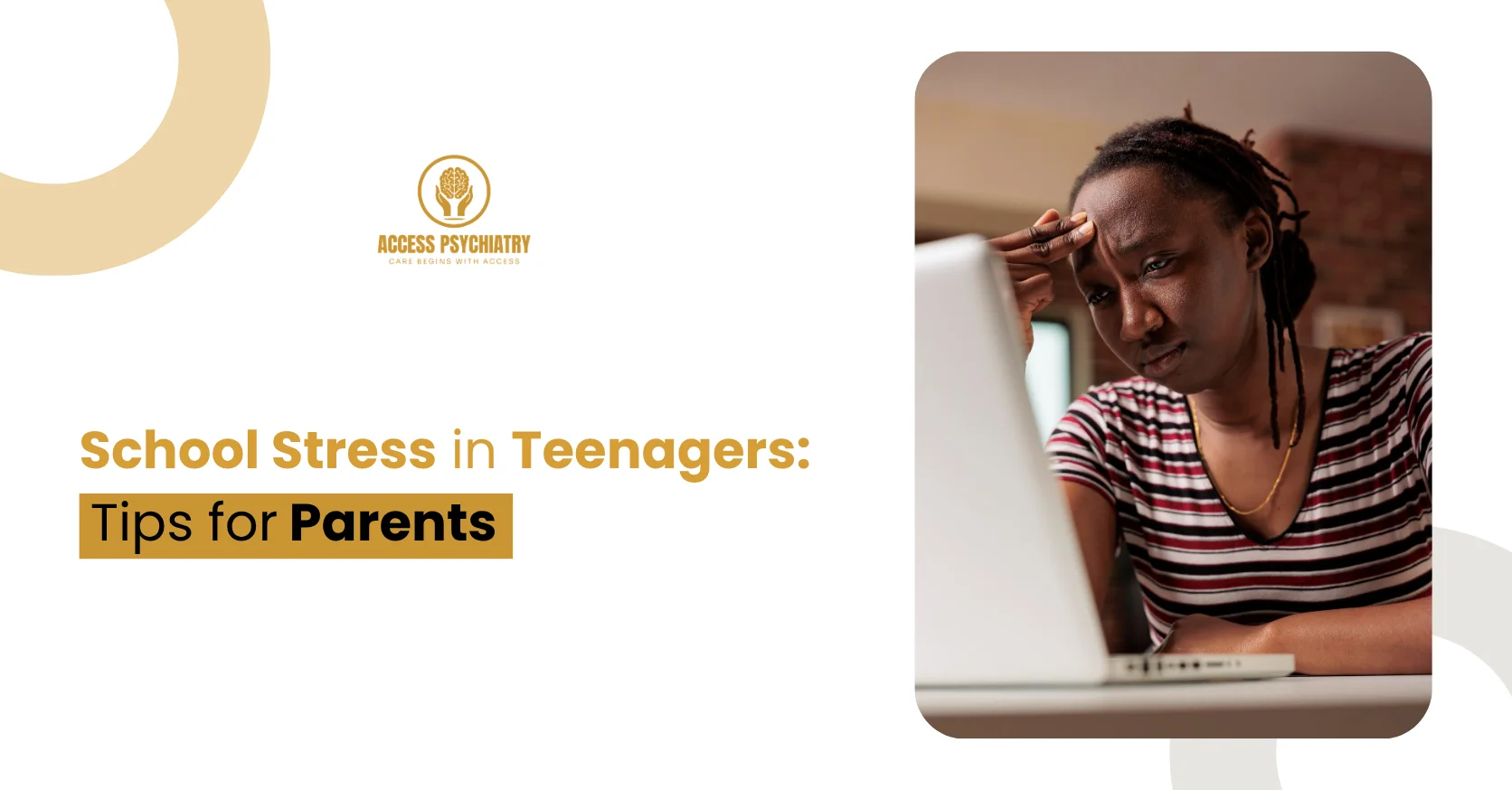
For many teenagers, school is more than classes, homework, and grades. It is also a daily environment filled with expectations, deadlines, friendships, social comparison, extracurricular activities, decisions about the future, and the pressure to succeed.
Some stress is a normal part of adolescence and can even motivate a teenager to prepare for an exam or complete an important assignment. But when stress becomes persistent or overwhelming, it can begin affecting sleep, mood, concentration, physical health, relationships, and academic functioning.
The challenge for parents is that teenagers do not always say, “I am overwhelmed.” Sometimes their behavior says it for them.
School Stress Does Not Always Look Like Stress
A teenager experiencing significant stress may become more irritable, argumentative, withdrawn, tired, forgetful, or emotionally sensitive. Parents may notice procrastination, declining grades, difficulty completing assignments, excessive sleeping or difficulty sleeping, changes in appetite, frequent headaches or stomachaches, or loss of interest in activities they previously enjoyed.
Sometimes what appears to be “laziness” may be mental exhaustion, anxiety, depression, ADHD, sleep deprivation, or feeling overwhelmed by demands that the teenager does not know how to manage.
This does not mean every change in behavior represents a mental health disorder. Adolescence naturally involves emotional and developmental changes. What deserves attention is a significant change from your teenager’s usual behavior, particularly when it persists or begins interfering with school, relationships, sleep, or everyday functioning.
The Pressure Teenagers May Not Talk About
Teenagers can experience pressure from many directions: maintaining grades, getting into college, fitting in socially, succeeding in sports, meeting family expectations, managing friendships and romantic relationships, navigating social media, and worrying about what comes after high school.
Some teenagers also place enormous expectations on themselves.
A high-achieving teenager can therefore struggle emotionally while still earning good grades. Academic success should not automatically be interpreted as evidence that a teenager is emotionally well.
What Parents Can Do
Listen before trying to fix the problem. Instead of immediately offering solutions, consequences, or advice, create an opportunity for your teenager to talk. Try asking, “You seem more overwhelmed lately. What has school been feeling like for you?”
Avoid minimizing their experience. Statements such as “You have nothing to be stressed about” or “Wait until you become an adult” may unintentionally discourage further communication. A problem may not seem overwhelming to an adult, but it can feel overwhelming to a teenager.
Look beyond the grades. Ask about sleep, friendships, concentration, motivation, bullying, social pressures, workload, and how your teenager feels emotionally—not simply whether assignments are completed.
Protect sleep and recovery time. Adolescents need adequate sleep, physical activity, nutritious meals, downtime, and opportunities to disconnect from constant academic and digital demands. Chronic sleep deprivation can worsen attention, mood, emotional regulation, and the ability to cope with stress.
Help organize rather than take over. When your teenager feels overwhelmed, help break large responsibilities into smaller, manageable steps. Calendars, planners, reminders, structured study periods, and realistic priorities can reduce the sense that everything must be accomplished at once.
Keep expectations realistic. Encourage effort, consistency, learning, and growth rather than perfection. A teenager’s emotional health should never be measured solely by a report card.
Stay connected with the school. Teachers, counselors, coaches, and school mental health professionals may notice changes that are less visible at home. Family and school connectedness are important protective factors for adolescent mental health.
Know When Stress May Be Something More
School stress can sometimes coexist with anxiety, depression, ADHD, bullying, trauma, substance use, or another mental health concern.
Consider seeking a professional evaluation when emotional or behavioral changes are persistent, worsening, or significantly interfering with daily functioning. Warning signs may include persistent sadness or hopelessness, severe anxiety, increasing isolation, significant changes in sleep or appetite, dramatic academic decline, frequent unexplained physical complaints, substance use, self-harm, or statements about death or suicide.
Any teenager expressing suicidal thoughts, self-harm, or an inability to remain safe requires immediate attention.
Your Teenager Needs Connection, Not Perfection
Parents do not need to have every answer. One of the most powerful things you can provide is a relationship in which your teenager knows they can speak without immediately being judged, criticized, compared, or punished.
Sometimes the most important question is not “Why are your grades dropping?”
It is: “I’ve noticed you haven’t seemed like yourself lately.
How are you really doing, and how can I support you?”
That conversation may reveal far more than a report card ever could.
“Connection often reaches a struggling teenager before correction ever will.”
Dr. Safari, DNP, APRN, CRNP, PMHNP-BC
Access Psychiatry, LLC