
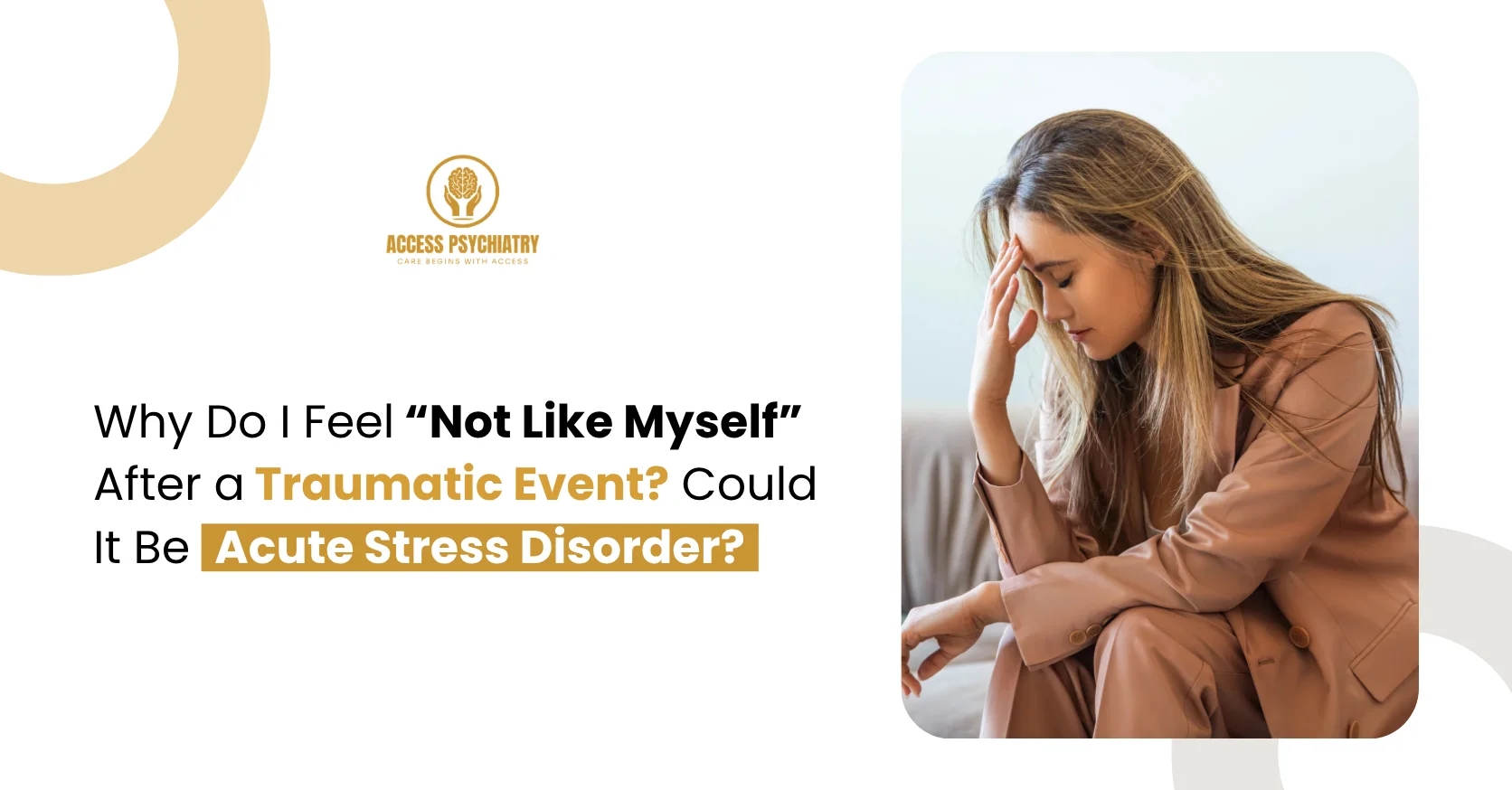
A scary event changes you. It leaves a mark, making the person in the mirror feel like a stranger. Though friends assure you are safe now, your nerves disagree, leaving you feeling disconnected and questioning why normal life feels strange. Sometimes, this fog means you have Acute Stress Disorder, or ASD. At Access Psychiatry, we help you untangle your confusing emotions and rediscover yourself.
What Is Acute Stress Disorder?
Acute Stress Disorder is a brief response to a traumatic experience that’s so intense it changes our perception of reality. Not a bad day. When you are involved in a car accident or disaster or suddenly lose a loved one, stress hormones flood your body. Then what happens when there’s no danger? You can’t turn off the alarm and your brain becomes dysfunctional, feeling broken and confused. If such feelings start within four weeks of an event and persist for three days to one month, doctors term it Acute Stress Disorder. When the feelings persist for over a month, it becomes PTSD.
Why Do I Feel So Different?
Surviving is exactly what your body is trying to do right now. Trauma rewires the brain, flooding your system with stress hormones that change how you see the world.
Here are reasons you feel strange today:
- Your brain is on high alert. Your mind scans shadows for danger. You simply cannot relax.
- You feel numb. The brain shuts down emotions to protect your heart. You might feel empty. You watch a movie of your life instead of living it.
- Your memories feel real. You suffer from scary flashbacks. A flashback pulls you backward in time, making you feel like the horror is repeating right now.
- You are very tired. Being afraid burns physical energy. Your body works overtime. This leaves you exhausted.
Signs of Acute Stress Disorder
How can you tell if this is what you are battling? Everyone processes pain differently, but major warning signs indicate ASD. If you have this condition, you will notice these struggles:
- Intrusive Thoughts: Scary memories rush into your head. You cannot stop the mental movie.
- Bad Dreams: Nightmares wake you up in a sweat. Sleep feels like a scary battlefield.
- Feeling Numb or Empty: You float through the day in a daze. Favorite hobbies do not matter anymore.
- Avoiding Things: You dodge certain streets and friends. You will do anything to avoid the pain.
- Feeling Jumpy or Edgy: A door slams and your heart races fast. You startle at very small noises.
- Trouble Sleeping or Focusing: Falling asleep takes hours. At work or school, your brain refuses to focus on simple tasks.
- Feeling Guilty or Angry: You blame yourself for the tragedy. Hot anger bubbles up over tiny inconveniences.
What Should You Do if You Feel This Way?
If you do not recognize yourself today, please hear this: you are not losing your mind. Your body is just stuck in survival mode and you do not have to go through this alone. Getting support is incredibly brave. Try these steps:
- Talk to Someone: Tell a trusted friend how bad it hurts. Speaking out loud takes away dark power.
- Take Care of Your Body: Eat simple meals. Drink water. A short walk outside – yes, even ten minutes – can clear your head.
- Be Patient with Yourself: Scars take time to fade. Do not punish yourself for having a bad afternoon.
- Get Professional Help: Providers understand trauma. They have the right tools to guide you.
How Access Psychiatry Can Help
At Access Psychiatry, we understand that behind every symptom of ASD is a real person deserving compassionate care. Dr. Mapendo Karen Safari and our team are standing by to offer personalized treatment for trauma conditions, supporting your recovery.
- We Listen to You: Tell your story at your own pace. Our office is a safe space.
- Expert Care: Dr. Safari brings over seventeen years of clinical experience. She understands what works best.
- Personalized Treatment Plans: You are unique. We build a clear roadmap fitting your specific needs (which might include talk therapy or helpful medications).
- Nutritional Support: Your physical health impacts your mind. We offer nutritional therapies, like Vitamin B12 support, to give your tired brain fuel.
Getting help early can stop ASD from turning into PTSD. At Access Psychiatry, our goal is to help people in Maryland feel better and find hope again, with welcoming offices in Glen Burnie and Laurel, plus convenient telehealth appointments across the state. If you or someone you know is having a tough time, don’t hesitate to reach out to us today. You can book an appointment online through Zocdoc or Headway, or reach out to our supportive team by phone. We are ready to help!
FAQs
Q. Why does trauma make a person so tired?
Being scared uses a lot of energy. The body works way too hard. This leaves a person feeling very weak and sleepy.
Q. Can trauma cause bad sleep?
Yes. Bad dreams can wake a person up in a sweat. The brain is too alert to rest well. This makes falling asleep very hard.