
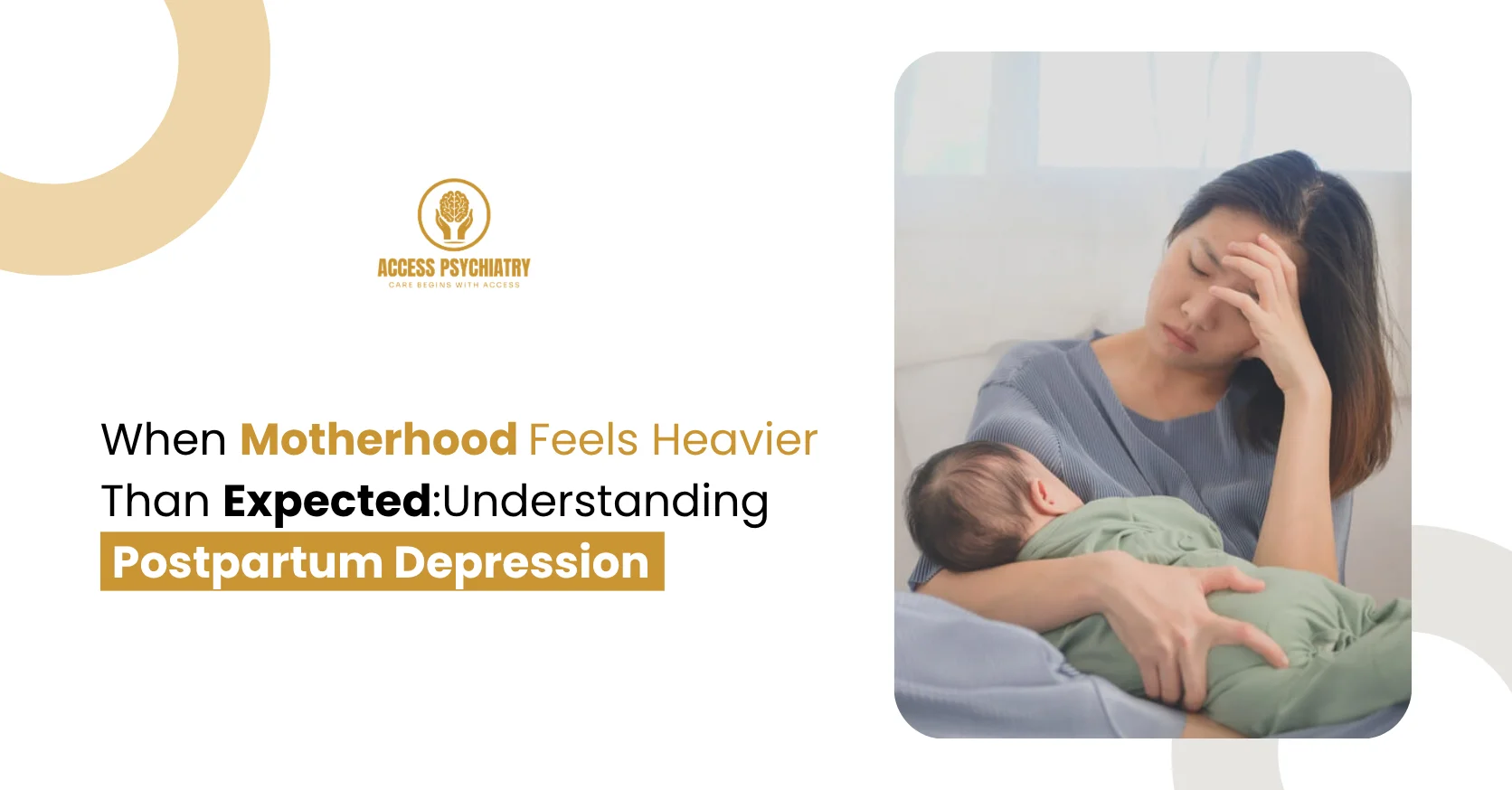
Having a baby is often described as one of life’s happiest moments. But for some mothers, the weeks and months after childbirth can bring unexpected sadness, anxiety, guilt, exhaustion, irritability, or a feeling of being disconnected from themselves or their baby.
When these feelings become persistent or overwhelming, they may be signs of postpartum depression (PPD), a real and treatable medical condition, not a reflection of a mother’s love, strength, or ability to parent.
Understanding the signs matters not only for mothers, but also for husbands, partners, family members, and friends who may be the first to notice that something has changed.
Baby Blues or Postpartum Depression?
Many mothers experience the “baby blues” shortly after delivery. Hormonal changes, physical recovery, sleep disruption, and the enormous adjustment of caring for a newborn can contribute to crying, irritability, worry, and feeling overwhelmed.
Baby blues are generally mild and improve within about two weeks. When emotional symptoms are severe, interfere with daily functioning, or continue beyond two weeks, postpartum depression should be considered and discussed with a healthcare professional.
What Can Postpartum Depression Look Like?
Postpartum depression does not always look like constant crying. A mother may appear to be functioning normally while struggling internally.
Signs may include:
- Persistent sadness, emptiness, or hopelessness
- Excessive worry or anxiety
- Irritability, anger, or feeling constantly overwhelmed
- Loss of interest or pleasure in previously enjoyable activities
- Feelings of guilt, worthlessness, or believing she is a “bad mother”
- Difficulty concentrating or making decisions
- Significant changes in appetite
- Difficulty sleeping even when the baby is sleeping, or sleeping excessively
- Severe fatigue or loss of energy
- Difficulty feeling emotionally connected to the baby
- Persistent doubts about being able to care for the baby
- Thoughts of death, suicide, or harming herself or the baby
A mother does not need to experience every symptom to need help.
Why Does Postpartum Depression Happen?
There is no single cause. Pregnancy and childbirth involve major biological, hormonal, psychological, and social changes. Sleep deprivation, the physical demands of childbirth, caring for a newborn, relationship stress, financial pressures, limited support, previous trauma, and other life stressors can all contribute.
A personal or family history of depression or bipolar disorder and previous perinatal depression can also increase risk.
Most importantly, postpartum depression is not something a mother chooses, and it should never be reduced to a lack of gratitude, faith, strength, or love for her child.
Husbands and Partners: Your Role Matters
Sometimes a partner recognizes the change before the mother does.
You may notice that she is withdrawing, crying frequently, unusually irritable, excessively worried, unable to sleep, overwhelmed by decisions, constantly questioning herself, or saying things such as, “I’m not a good mother,” “I can’t do this,” or “Everyone would be better without me.”
Do not dismiss these changes as simply hormones or tell her to “snap out of it.”
Instead, ask how she is really feeling, and listen without immediately trying to correct, minimize, or solve everything.
Support can also be practical. Help protect time for sleep, share nighttime and household responsibilities when possible, prepare meals, care for the baby so she can shower or rest, help coordinate appointments, and remind her that seeking professional care is a sign that something needs treatment, not evidence that she has failed.
Sometimes the most meaningful words are simply:
“I see that you’re struggling. You don’t have to carry this alone. We will get help together.”
Postpartum Depression Is Treatable
Recovery is possible. Treatment depends on the severity of symptoms, medical history, individual circumstances, and whether the mother is breastfeeding.
Evidence-based treatment may include psychotherapy, medication, or a combination of both. Cognitive behavioral therapy (CBT) and interpersonal therapy (IPT) are established psychotherapy approaches for perinatal depression.
Antidepressants may also be appropriate. Treatment decisions during breastfeeding should be individualized with a qualified healthcare professional by considering the mother’s symptoms, previous treatment response, medication risks and benefits, and the health of both mother and baby.
There are also medications specifically approved by the FDA for postpartum depression, including brexanolone, administered intravenously in a monitored healthcare setting, and zuranolone, an oral medication taken as a 14-day treatment course.
The important message is simple: a mother does not have to wait until she reaches a crisis before asking for help.
Know When It Is an Emergency
Postpartum depression should also be distinguished from postpartum psychosis, a rare but serious psychiatric emergency.
Warning signs can include severe confusion, hallucinations, delusions, paranoia, markedly abnormal behavior, or symptoms of mania. These symptoms require immediate emergency psychiatric evaluation.
Thoughts of suicide or harming the baby also require immediate attention. In the United States, call or text 988 for the Suicide & Crisis Lifeline; call 911 or go to the nearest emergency department when there is immediate danger.
A Message to Mothers
You can love your baby deeply and still experience depression.
You can be grateful for motherhood and still feel overwhelmed.
You can look strong to everyone around you and still need support.
Postpartum depression does not define the kind of mother you are. With recognition, compassionate support, and appropriate treatment, recovery is possible.
And to husbands, partners, families, and friends: pay attention to the mother, too. After a baby arrives, much of the world’s attention naturally turns toward the newborn. Sometimes the person quietly needing care is the mother holding that baby.
Take care of the baby and remember to take care of the mother.
Written by Dr. M. Safari, DNP, APRN, PMHNP-BC
This article is intended for educational purposes only and does not replace individualized medical or psychiatric evaluation, diagnosis, or treatment.