
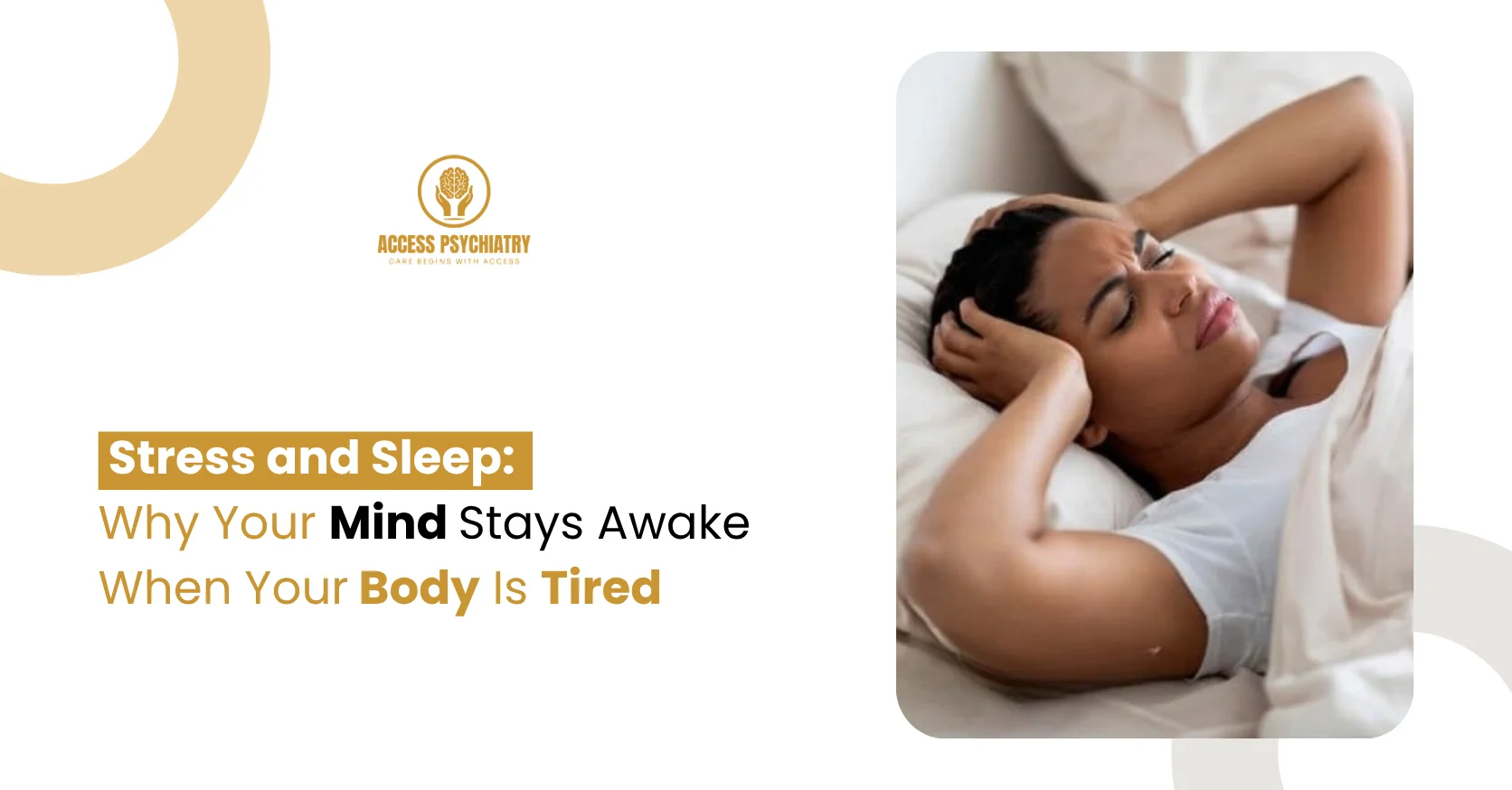
Have you ever felt exhausted all day, only to become wide awake the moment you get into bed? You may feel physically tired while your mind continues racing, or you may fall asleep easily but wake repeatedly throughout the night. Stress can contribute to this frustrating pattern by keeping the brain and body in a heightened state of alertness when they should be preparing for rest.
Understanding Cortisol and Your Sleep-Wake Cycle
Cortisol is a hormone produced by the adrenal glands that plays an important role in the body’s response to stress, metabolism, immune function, and daily sleep-wake rhythm. Cortisol normally follows a circadian pattern: levels generally rise toward morning to support wakefulness and gradually decline later in the day.
Melatonin follows a different pattern. As evening approaches and environmental light decreases, melatonin production increases and helps signal that it is time for sleep. Light exposure, sleep schedules, stress, behavior, and the body’s internal clock all influence these interconnected systems.
What Happens When Stress Becomes Chronic?
Stress activates systems designed to help us respond to challenges. This response is useful in the short term, but persistent psychological or physical stress can promote hyperarousal, making it difficult for the nervous system to transition into a restful state.
Some studies have identified changes in hypothalamic-pituitary-adrenal (HPA) axis activity and cortisol patterns among people with insomnia, but the relationship is complex. Not everyone with insomnia has elevated nighttime cortisol, and cortisol alone should not be assumed to be the cause of poor sleep.
What people often notice instead are the effects of increased arousal:
- Difficulty falling asleep despite feeling exhausted
- Racing thoughts or excessive worry at bedtime
- Frequent nighttime awakenings
- Light or unrefreshing sleep
- Daytime fatigue, irritability, or difficulty concentrating
- Feeling “tired but wired”
Poor sleep can then increase stress and emotional reactivity the following day, creating a cycle in which stress disrupts sleep and inadequate sleep makes stress more difficult to manage.
Mental Health and Sleep
Sleep and mental health are closely connected. Anxiety may make it difficult to quiet persistent worry, while depression, trauma-related disorders, and other psychiatric conditions can affect sleep duration, timing, and quality.
Sleep disruption can also worsen mood, concentration, emotional regulation, and anxiety. For this reason, evaluate persistent sleep problems as part of overall mental and physical health rather than automatically attributing them to stress alone.
Simple Ways to Support Better Sleep
Healthy sleep habits can help strengthen the body’s natural sleep-wake rhythm. Consider:
- Maintain a consistent schedule. Go to bed and wake up at approximately the same time each day.
- Get natural light earlier in the day. Morning and daytime light help regulate the body’s internal clock.
- Create a wind-down routine. Reduce bright light and stimulating activities before bedtime and choose calming activities instead.
- Limit caffeine later in the day. Caffeine can interfere with the ability to fall asleep and maintain restful sleep.
- Exercise regularly. Routine physical activity can support sleep and overall mental health.
- Create a sleep-friendly environment. Keep the bedroom quiet, dark, comfortable, and cool.
- Address daytime stress. Relaxation exercises, mindfulness, therapy, journaling, and other healthy coping strategies may reduce the amount of emotional activation carried into bedtime.
Consistency matters more than perfection. Small habits practiced regularly can help reinforce healthier sleep patterns.
When Should You Seek Professional Help?
Occasional difficulty sleeping is common, particularly during stressful periods. However, persistent difficulty falling asleep, staying asleep, or obtaining restorative sleep deserves further evaluation, especially when it affects daytime functioning or occurs alongside depression, anxiety, trauma symptoms, excessive daytime sleepiness, loud snoring, breathing interruptions, or other health concerns.
For adults with chronic insomnia, Cognitive Behavioral Therapy for Insomnia (CBT-I) is considered a first-line treatment. CBT-I addresses the thoughts, behaviors, and sleep patterns that perpetuate insomnia and can provide lasting improvement without relying solely on sleep medication.
Medication may also be appropriate for some individuals after considering symptoms, medical history, other medications, and possible underlying sleep disorders.
The Bottom Line
Stress hormones are not inherently harmful. Cortisol is essential for normal functioning, including helping the body respond to challenges and supporting wakefulness at the appropriate time of day.
The problem arises when ongoing stress, heightened arousal, unhealthy sleep patterns, or an underlying medical or mental health condition repeatedly interferes with the body’s ability to transition into restorative sleep. Addressing both sleep and the factors contributing to stress can help restore a healthier cycle and improve daytime energy, mood, concentration, and overall well-being.
If sleep problems continue despite healthy sleep habits, professional evaluation can help identify the underlying cause and determine the most appropriate treatment.
Written by Dr. M. Safari, DNP/PMHNP-BC
This article is for educational purposes only and is not a substitute for professional medical advice, diagnosis, or treatment.