
Written by Dr. Mapendo K. Safari, DNP, APRN, PMHNP-BC
Founder & CEO, Access Psychiatry
You can love someone deeply, support them through mental illness, and still make room to care for yourself.
When someone you love is living with a mental health condition, their struggles can become part of your everyday life. You may spend hours worrying about their safety, managing appointments, offering emotional reassurance, or trying to help them through difficult moments.
Over time, you may begin putting their needs ahead of your own. Your sleep suffers, your relationships change, and activities that once brought you joy slowly disappear.
You may even feel guilty for wanting a moment to yourselfa.
But caring for someone should not mean losing yourself in the process.
At Access Psychiatry, we believe that compassionate mental health care should extend beyond the individual receiving treatment. Families, partners, friends, and caregivers also deserve understanding, education, and support.
Why Your Mental Health Matters, Too
Supporting someone with depression, bipolar disorder, schizophrenia, anxiety, or another mental health condition can be emotionally demanding.
Some days may feel manageable. Others may involve uncertainty, emotional exhaustion, financial strain, or concerns about your loved one’s well-being.
You may find yourself constantly asking:
- Are they taking their medication?
- What if their symptoms become worse?
- What if they refuse treatment?
- Am I doing enough?
- What will happen if I am not available?
These concerns can become overwhelming, particularly when caregiving responsibilities continue for months or years.
What Research Tells Us About Caregiver Health
Research from the Centers for Disease Control and Prevention (CDC) has identified important differences in health outcomes between caregivers and noncaregivers.
In a CDC analysis of Behavioral Risk Factor Surveillance System data, researchers found that:
- 25.6% of caregivers reported a lifetime diagnosis of depression, compared with 18.6% of noncaregivers.
- 20.5% of caregivers reported frequent mental distress, compared with 13.6% of noncaregivers.
- Caregivers reported less favorable outcomes on 13 of 19 health indicators examined.
These findings reflect caregivers supporting people with health conditions or disabilities, not exclusively caregivers of individuals with mental illness. They also demonstrate associations rather than proving that caregiving causes depression.
Nevertheless, the message is important: caregiving responsibilities can place substantial demands on physical and emotional health.
Your well-being deserves attention before exhaustion becomes overwhelming.
Recognizing the Signs of Caregiver Burnout
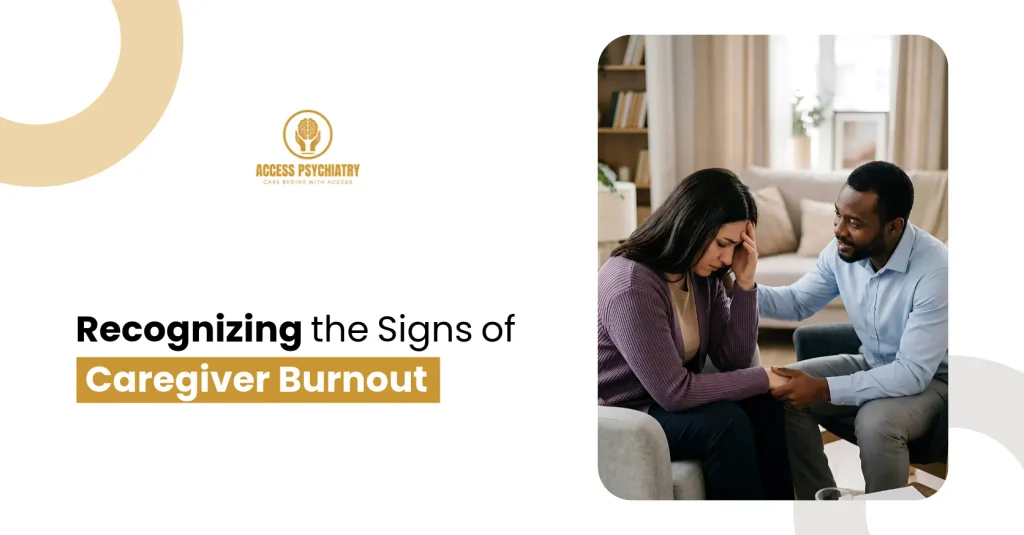
Caregiver burnout refers to a state of physical, emotional, and mental exhaustion associated with ongoing caregiving demands.
It often develops gradually.
You may initially dismiss the warning signs as ordinary tiredness or stress. Over time, however, the effects can interfere with your health, relationships, and daily functioning.
Physical Warning Signs
You may notice:
- Persistent fatigue, even after resting
- Difficulty falling asleep or staying asleep
- Sleeping more than usual
- Frequent headaches or muscle tension
- Changes in appetite or eating habits
- Stomach discomfort
- Reduced energy or motivation
- Neglecting your own medical appointments
Emotional and Psychological Warning Signs
You may experience:
- Persistent sadness or emotional exhaustion
- Excessive worry about your loved one’s condition
- Irritability or frustration
- Feelings of guilt or inadequacy
- Difficulty concentrating
- Loss of interest in activities you previously enjoyed
- Emotional numbness or detachment
- Social withdrawal
- Feelings of helplessness or resentment
Experiencing these symptoms does not automatically mean you have a mental health disorder.
However, persistent symptoms deserve attention.
If sadness, loss of interest, anxiety, or other emotional difficulties continue, worsen, or interfere with daily functioning, consider seeking a professional mental health evaluation.
You do not need to wait two weeks to ask for help, particularly when symptoms are severe or affect your safety.
Setting Healthy Boundaries Without Feeling Guilty
One of the most challenging parts of caring for someone with mental illness is learning where your responsibilities begin and end.
You may believe that saying no means abandoning someone you love.
It does not.
Healthy boundaries allow you to remain compassionate without sacrificing your physical health, emotional stability, or personal identity.
Boundaries are not punishments. They communicate what you can reasonably offer while respecting the needs and dignity of everyone involved.
Boundaries Around Your Time
You can offer support without being available very moment.
For example:
“I can help you with your appointments on Tuesdays, but I need Sunday afternoons for rest and personal responsibilities.”
Financial Boundaries
Financial assistance can become difficult when there are repeated requests for money.
You might say:
“I can help with this expense, but I cannot take responsibility for all your financial needs.”
Emotional Boundaries
Listening to someone you love is important, but repeatedly absorbing intense emotional distress can become overwhelming.
You might say:
“I care about what you are experiencing, and I want to listen. I also need time to rest. Can we continue this conversation tomorrow?”
Boundaries Around Treatment Decisions
You can encourage treatment without assuming complete control over another adult’s health care.
For example:
“I am happy to accompany you to your appointment, but I want you to feel comfortable discussing your concerns and treatment preferences with your provider.”
Adults generally retain the right to participate in their own treatment decisions, subject to applicable laws and circumstances involving decision-making capacity or immediate safety concerns.
What If Setting Boundaries Makes You Feel Guilty?
Guilt is common when you begin changing established caregiving patterns.
You may worry that your loved one will feel rejected or disappointed.
However, feeling guilty does not necessarily mean your decision is wrong.
Healthy boundaries can help reduce resentment, prevent exhaustion, and make supportive relationships more sustainable.
You can be present for someone without being responsible for everything they experience.
You Are a Loved One, Not Their Therapist
When someone you care about is struggling emotionally, it is natural to want to fix the problem.
You may spend hours researching diagnoses, monitoring symptoms, suggesting treatment options, or trying to convince them to make healthier choices.
Although your intentions may be loving, there is an important distinction between offering support and assuming the responsibilities of a mental health professional.
You are not expected to diagnose psychiatric conditions, prescribe medications, or independently manage serious psychiatric symptoms.
Instead, your role may include:
- Listening without judgment
- Encouraging professional evaluation
- Helping identify appropriate treatment resources
- Offering transportation to appointments
- Supporting medication routines when appropriate and agreed upon
- Recognizing significant changes in behavior
- Encouraging healthy daily routines
- Participating in treatment discussions with your loved one’s permission
Professional mental health care may include psychiatric evaluation, psychotherapy, medication management, and coordinated support.
At Access Psychiatry, we provide individualized psychiatric care for conditions including depression, anxiety disorders, bipolar disorder, ADHD, schizophrenia, and other mental health concerns.
Seeking professional treatment does not mean you have failed your loved one. It means you recognize that meaningful care often requires more than one person’s support.
Build a Support System: You Do Not Have to Carry Everything Alone
Caregiving can become especially difficult when one person assumes nearly every responsibility.
Sharing responsibilities can help reduce emotional strain and create a more consistent support system.
Consider involving trusted individuals who can assist with practical tasks, emotional support, or temporary relief.
Your support network may include family members, friends, mental health professionals, community organizations, faith leaders, and caregiver support groups.
Be Specific When Asking for Help
Instead of waiting for someone to help, consider making a clear request.
For example:
“Can you take Mom to her appointment on Wednesday?”
“Would you be able to prepare dinner one evening this week?”
“Can you spend two hours with him on Saturday so I can attend my own appointment?”
Specific requests make it easier for others to understand how they can contribute.
Consider Family Education and Support Groups
The National Alliance on Mental Illness (NAMI) offers NAMI Family-to-Family, a free educational program designed for family members and other supporters of adults living with mental health conditions.
The program provides information about mental illness, communication, problem-solving, self-care, and available resources.
Research has found improvements in several caregiver-related outcomes following participation in structured family education programs, including coping and knowledge about mental illness.
Programs such as these can help caregivers feel more informed, supported, and connected to others facing similar challenges.
Protect the Parts of Your Life That Belong to You
When mental illness affects someone, you love, caregiving can gradually become the center of your identity.
You may stop exercising, cancel social plans, abandon hobbies, or postpone your own goals.
Over time, this can contribute to isolation and emotional exhaustion.
Maintaining personal routines is not a distraction from caregiving. It is part of protecting your overall health.
Small Ways to Reconnect With Yourself
Consider making time to:
- Take a short walk outdoors
- Enjoy a meal without distractions
- Call a trusted friend
- Read, journal, or listen to music
- Practice relaxation or mindfulness
- Maintain regular sleep and meal schedules
- Attend a class, religious service, or community activity
- Schedule your own medical and dental appointments
- Spend time doing something unrelated to caregiving
You do not need an elaborate self-care routine.
Small, consistent activities can help preserve your sense of identity and provide opportunities for emotional recovery.
Your life still matters, even when someone you love is struggling.
Recognize When You Need Professional Mental Health Support
Caregivers sometimes become so focused on another person’s symptoms that they overlook their own.
You may dismiss persitent anxiety, sadness, or sleep disturbances because your loved one’s condition seems more urgent.
However, your mental health concerns deserve the same seriousness and compassion you would offer someone else.
Consider seeking professional support when:
- Worry interferes with your sleep or concentration
- You feel persistently overwhelmed
- You experience frequent sadness, irritability, or hopelessness
- You have difficulty managing daily responsibilities
- Your relationships are suffering
- You feel emotionally disconnected or exhausted
- You begin relying on alcohol or other substances to cope
- You experience thoughts of self-harm or feel unable to remain safe
Mental health treatment may include psychotherapy, stress-management strategies, evaluation for anxiety or depression, and medication when clinically appropriate.
At Access Psychiatry, we recognize that caregivers may also need individualized mental health care.
Our services include psychiatric evaluations, medication management, psychotherapy, and telehealth appointments for eligible patients.
Seeking support early may help prevent symptoms from becoming more severe.
Helping Your Loved One Without Taking Over Their Life
Supporting someone with mental illness requires balancing compassion, practical assistance, and respect for their independence.
The following strategies may help.
1. Encourage Professional Treatment
Support your loved one in finding a qualified mental health professional.
You can help research treatment options, discuss concerns, or accompany them to appointments when appropriate.
Avoid making treatment decisions for an adult who can make those decisions independently.
2. Develop a Crisis and Safety Plan
If your loved one has a history of psychiatric crises, discuss creating a written safety plan with their treatment team.
A plan may include:
- Early warning signs of worsening symptoms
- Coping strategies that have helped previously
- Trusted people who can provide support
- Contact information for treating clinicians
- Local crisis resources
- Steps to reduce access to potentially dangerous items during a crisis
- When to seek emergency evaluation
Whenever possible, involve your loved one in developing the plan.
3. Know When to Seek Emergency Help
If your loved one is experiencing suicidal thoughts, severe emotional distress, or another mental health crisis, immediate support is available.
Call or text 988 to reach the Suicide & Crisis Lifeline in the United States.
The 988 Lifeline provides free, confidential crisis support for people experiencing emotional distress, suicidal thoughts, or concerns about someone they love.
Call 911 when there is an immediate threat to life, a serious medical emergency, or a situation requiring an urgent emergency response.
For information about mental health or substance use treatment resources, SAMHSA’s National Helpline is available at 1-800-662-HELP (4357).
The SAMHSA helpline provides treatment referrals and information; it is not a substitute for emergency crisis intervention.
4. Share Caregiving Responsibilities
Identify tasks that others can reasonably manage.
These may include transportation, meals, household responsibilities, paperwork, or appointment coordination.
A shared plan can help prevent one person from becoming overwhelmed.
5. Respect Your Loved One’s Dignity and Independence
Mental illness does not eliminate a person’s right to be heard, respected, and involved in decisions about their life.
Encourage participation in treatment while recognizing that recovery may involve setbacks and individual choices.
You can offer guidance, communicate concerns, and provide support without controlling every decision.
Supporting recovery means walking alongside someone, not carrying their entire life on your shoulders.
How Access Psychiatry Can Help
At Access Psychiatry, we understand that mental illness can affect individuals and the people who love them.
Our approach emphasizes compassionate, individualized care that supports emotional well-being, psychiatric stability, and long-term functioning.
Depending on individual needs, services may include:
Comprehensive Psychiatric Evaluations: Assessment of symptoms, psychiatric history, functioning, and treatment needs.
Medication Management: Evaluation of medication options, treatment response, potential side effects, and ongoing adjustments when clinically indicated.
Psychotherapy and Emotional Support: Evidence-based and supportive approaches to help patients manage emotional distress, develop coping strategies, and improve daily functioning.
Patient and Family Education: Guidance about psychiatric conditions, treatment expectations, medication adherence, and recognizing changes that may require professional attention.
Ongoing Psychiatric Care: Follow-up appointments to assess progress and adjust treatment plans as needed.
Access Psychiatry offers in-person and telehealth services, subject to provider availability, clinical appropriateness, and applicable state requirements.
Whether you are seeking care for yourself or a loved one, reaching out for professional guidance can be an important first step.
A Final Word: You Deserve Care, Too
Loving someone with mental illness can require extraordinary patience, compassion, and emotional strength.
There may be days when you feel hopeful and others when you feel exhausted, frightened, or uncertain.
You may not always know the right thing to say or the best way to help.
That does not mean you have failed.
Remember that your loved one’s recovery does not depend on your ability to do everything.
You are allowed to rest.
You are allowed to have boundaries.
You are allowed to ask for help.
And you are allowed to have a life filled with purpose, connection, and joy beyond your caregiving responsibilities.
Caring for yourself does not diminish the love you have for someone else. It helps make that love sustainable.
If you or someone you love needs mental health support, Access Psychiatry is here to help.
Access Psychiatry
Mental health begins with access.
Website: www.accesstopsychiatry.com
Frequently Asked Questions
How can I set boundaries without feeling guilty?
Start with one realistic boundary and communicate it calmly and respectfully. Explain what you can offer rather than focusing only on what you cannot do. Feelings of guilt may occur initially, particularly if you are accustomed to prioritizing someone else’s needs. Over time, consistent boundaries can help create healthier expectations.
Is it selfish to take time for myself when someone I love is struggling?
No. Maintaining your physical and emotional health is an important part of sustainable caregiving. Rest, social connections, personal interests, and medical care help protect your well-being.
Can I support a loved one with mental illness from a distance?
Yes. You can maintain regular contact, offer emotional support, help identify treatment resources, coordinate practical assistance with permission, and encourage professional care. Your ability to provide meaningful support is not determined solely by physical proximity.
What should I do if my loved one refuses mental health treatment?
Begin by listening to their concerns without judgment. Ask what makes treatment difficult and explore whether they would be comfortable speaking with a mental health professional. Avoid threats or coercion. If there are immediate safety concerns, seek crisis assistance. In nonemergency situations, respect an adult’s decision-making rights while maintaining your own boundaries.
When should caregivers consider therapy?
Consider therapy whenever caregiving stress begins affecting your emotional well-being, sleep, relationships, concentration, or ability to function. You do not need to wait until symptoms become severe. Professional support can help you develop coping strategies, address difficult emotions, and maintain healthier boundaries.
What if I feel resentful toward the person I am caring for?
Resentment can develop when caregiving demands exceed available emotional, physical, or financial resources. These feelings do not necessarily mean you lack compassion. They may indicate that you need additional support, clearer boundaries, or opportunities for rest. Speaking with a mental health professional can help you process these emotions constructively.
References and Evidence-Based Resources
- Centers for Disease Control and Prevention (CDC). Caregiving for Family and Friends — A Public Health Issue. Information about the prevalence of caregiving and its effects on caregiver health.
- Centers for Disease Control and Prevention (CDC). Caregiving Among Adults in the United States. Behavioral Risk Factor Surveillance System findings comparing caregiver and noncaregiver health indicators.
- National Institute of Mental Health (NIMH). Caring for Your Mental Health. Guidance on recognizing mental health concerns and seeking professional assistance.
- National Alliance on Mental Illness (NAMI). NAMI Family-to-Family. Evidence-informed education and support for families affected by mental illness.
- Dixon, L. B., et al. (2011). Outcomes of a randomized study of the NAMI Family-to-Family education program. Psychiatric Services, 62(6), 591–597.
- Substance Abuse and Mental Health Services Administration (SAMHSA). National Helpline. Information about mental health and substance use treatment referrals.
- 988 Suicide & Crisis Lifeline. Information about confidential crisis support, safety planning, and emergency resources.
This article is intended for educational purposes and does not replace individualized medical or psychiatric evaluation, diagnosis, or treatment.